Why Trees Are Becoming Line Items in Commercial Property Risk Models

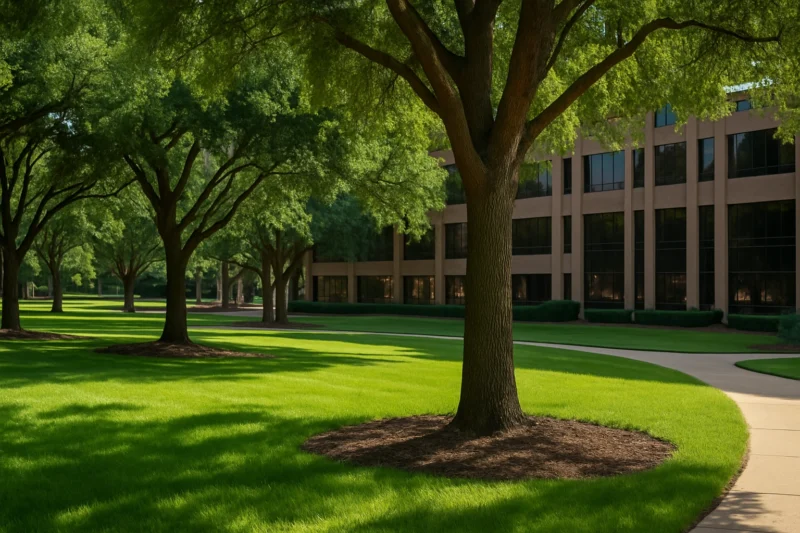
In Florida’s climate, a single mature tree can add $5,000 to $15,000 in appraised value to a commercial property. But too often, trees are treated as décor, not assets. Until one fails. As a Certified Arborist and irrigation system engineer, I’ve seen firsthand how tree health intersects with infrastructure longevity, tenant safety, and risk mitigation.
The Overlooked Asset Class
Most commercial property owners don’t factor tree loss into their capital planning. Yet replacing a 30-foot shade tree after storm damage or drought stress isn’t just expensive — it can trigger insurance claims, ADA compliance issues, or even tenant loss.
That’s why we now treat trees as infrastructure components in our irrigation system designs at Deep Green Landscapers. With 300+ trees under our care across public and private projects, we’ve documented the cost savings of proactive irrigation and arbor care strategies.
Smart Irrigation for Root Health
We use deep root watering systems with pressure-regulated emitters that deliver moisture exactly where the tree needs it. These systems reduce water waste by up to 50% compared to surface watering and prevent shallow root development, which is a major cause of tree instability.
In the Weston Lakes Commercial Complex, we redesigned two irrigation zones to support deep root systems for 40+ landscape trees. The result: healthier canopies, fewer disease interventions, and zero tree loss in two hurricane seasons.
Compliance, Liability, and the Legal Landscape
Florida municipalities are tightening landscaping ordinances. Trees damaged due to negligent watering or over-pruning now expose property managers to legal and financial risk. Documented arbor care plans supported by smart irrigation are becoming best practice — not just for sustainability, but for liability mitigation.
At Sabal Pines Park, we aligned the irrigation system with tree preservation requirements outlined in their Water Star certification. Our documentation supported permit renewals and satisfied both city engineers and insurance auditors.
Asset Management and Portfolio ROI
Healthy trees lower cooling costs, increase curb appeal, and directly contribute to tenant satisfaction. For REITs and property funds managing multiple sites, a scalable tree health program powered by smart irrigation reduces CapEx risk.
It’s no coincidence that our commercial clients with tree-integrated irrigation plans see 15–25% fewer landscape-related repair calls year-over-year.
Conclusion: Infrastructure Means Living Systems
Trees are not just aesthetic. They’re infrastructure. When integrated with sensor-driven irrigation and proactive arbor care, they become long-term assets — delivering value, performance, and resilience.
The question is no longer whether you can afford to care for them — it’s whether you can afford not to.
About the Author
Carlos Gil is the Owner & Project Director of Deep Green Landscapers LLC and a Certified Arborist based in Weston, Florida. Over his 16-year career, he’s managed smart irrigation and arbor care projects for commercial sites, HOAs, and municipalities across South Florida, saving over 15 million gallons of water and protecting more than 300 trees.