


Recent Posts
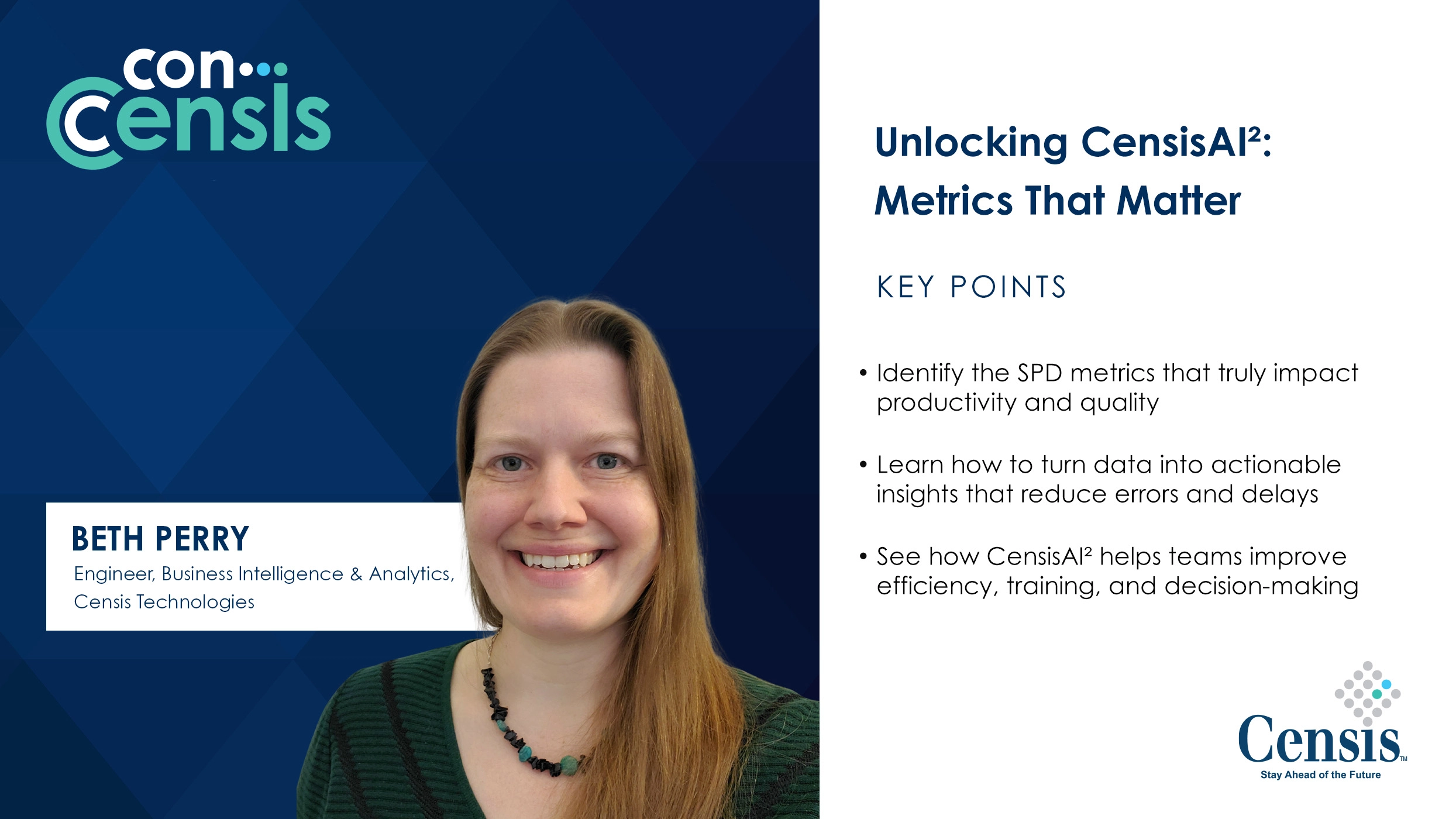
Unlocking CensisAI²: The Metrics That Matter for Smarter SPD Decisions
Daniel Litwin - May 13, 2026Sterile processing departments are swimming in data, from workflow automation and supply data to patient outcome and quality metrics. But the real challenge is not collecting more information; it is knowing which metrics actually improve SPD performance, technician education, OR readiness and patient safety.
Read more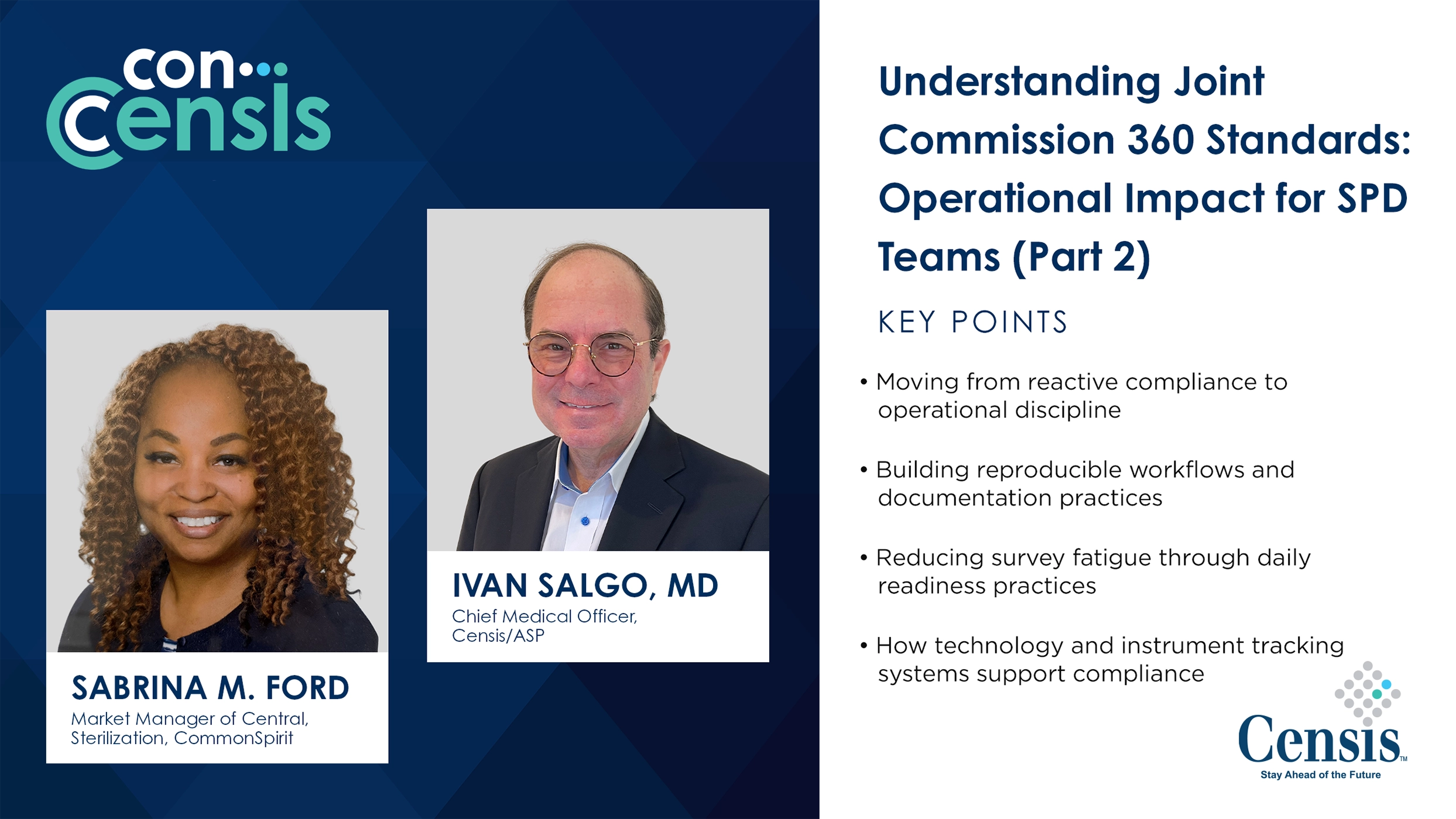
Understanding Joint Commission 360 Standards: What They Mean for SPD Teams (Part 2)
Daniel Litwin - March 23, 2026Healthcare teams today are feeling the pressure to move beyond last-minute compliance and instead build processes that work consistently every day. That shift is especially clear in sterile processing departments (SPDs), where the Joint Commission 360 model is redefining what survey readiness really means.
Read more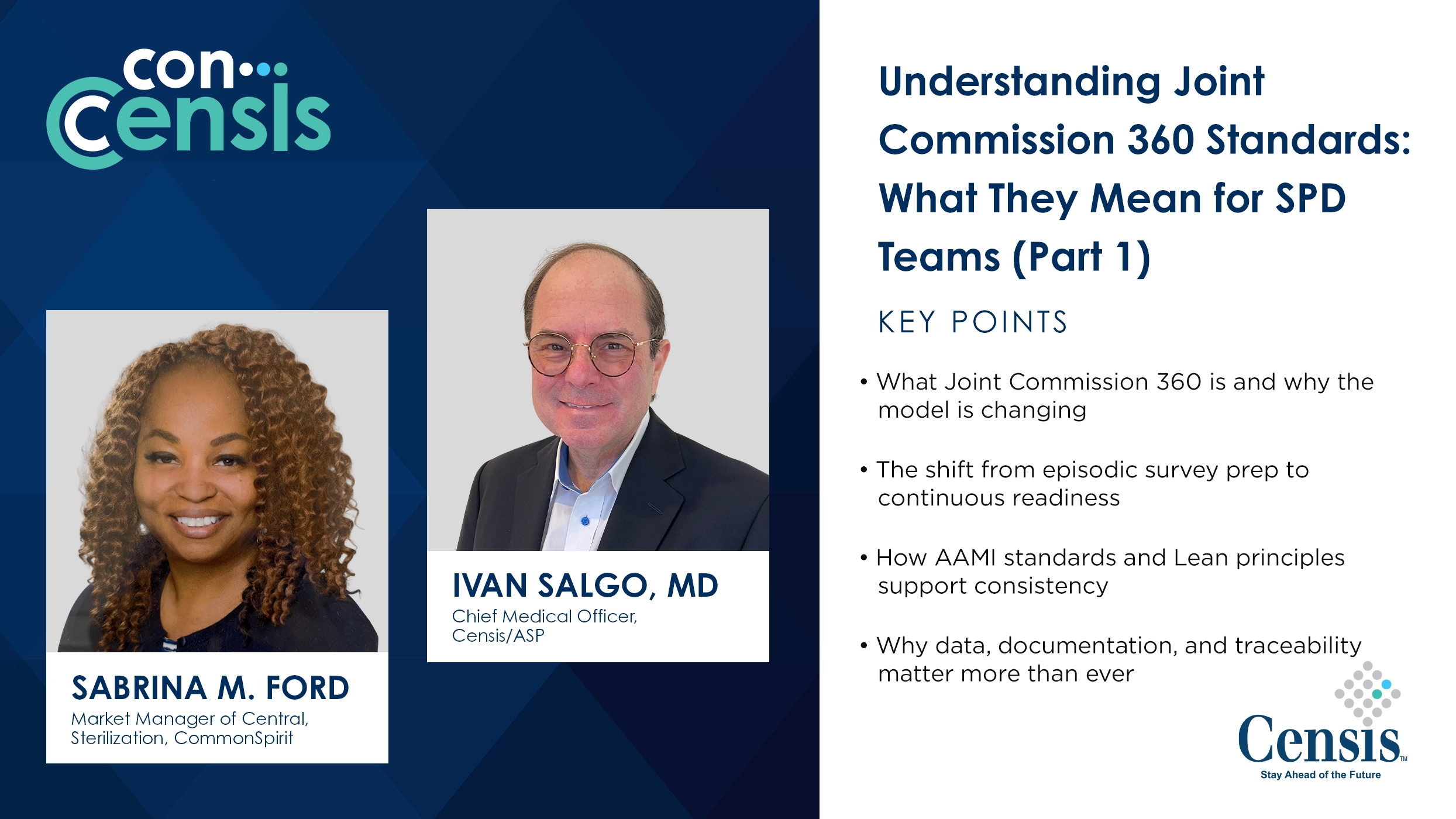
Understanding Joint Commission 360 Standards: What They Mean for SPD Teams (Part 1)
Daniel Litwin - March 17, 2026For a long time, compliance in healthcare was tied to the survey cycle. Now, that model is shifting.
Read more
Censis’ Final Check Uses Computer Vision to Eliminate Tray Errors Before They Reach the OR
Daniel Litwin - February 19, 2026Artificial intelligence used to live in strategy decks and conference keynotesbut now its showing up in a very different place: right on the assembly tables where SPD technicians build trays for the next case. And its arriving at a time when the pressure on sterile processing has never been higher.
Read more
AI in Sterile Processing Is Proving Its Value by Acting as a Co-Pilot, Not a Replacement
Daniel Litwin - February 5, 2026Sterile processing departments are dealing with persistent operational pressures. Surgical case volumes are rising, instruments are more complex, and staffing shortages remain across many health systems.
Read more
Survey Ready Every Day: Why It’s Not Just a Once-a-Year Activity
Daniel Litwin - January 13, 2026Unannounced surveys are no longer the exception in healthcaretheyre the norm. Accrediting bodies increasingly expect sterile processing departments (SPDs) to demonstrate consistent compliance, real-time documentation, and reliable adherence to manufacturers instructions for use on any given day, not just during audit season.
Read more