Workforce Education Will Be Industrialized Construction’s Path to Success

It is projected that by 2035, most buildings will be constructed by industrialized construction. This should be a point of optimism for the industry; IC allows manufacturing and construction to merge, which utilizes manufacturing’s ability to mass-produce and the construction industry’s skill in design to build unique prefabrication and modular buildings.

This isn’t just an operational shift, but a major financial opportunity for these two industries as well. The pre-fab building market is estimated to grow to $153.7 billion by 2026, according to Global Industry Analysts Inc., due in part to recent advancements in the construction industry’s manufacturing, design, and assembly potential, which have dominoed into labor productivity with automation, reduced costs and lean construction, all while improving the quality of a building.

So what does this massive growth in industrialized construction mean for the world, and can the construction industry’s professional workforce adapt to this increased demand and shifting workflows?

Juan Carlos Cabrero, Director of COAAT Madrid‘s Industrialized Construction Specialist Course, offered his perspectives on challenges in the industry in terms of professional and industry labor, as well as the resources out there for those interested in developing professionals skills for industrialized construction.

Cabrero wants to see modular and pre-fab projects built better, faster, sustainable, affordable, safe, and projects built within cost. These things are indeed possible within industrialized construction, he says. Listen to his thoughts above for more.

Follow us on social media for the latest updates in B2B!

Image

Latest

student visibility
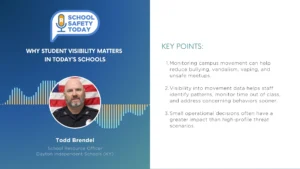
Why Student Visibility Matters in Today’s Schools
March 3, 2026

School Safety Today podcast, presented by Raptor Technologies. In this episode of School Safety Today by Raptor Technologies, host Dr. Amy Grosso interviews SRO Todd Brendel of Dayton Independent Schools (KY), who shares frontline insights on the importance of knowing where students and staff are throughout the school day. He explains how they manage…

Read More
skilled trades mentorship
Why the Trades Need a Cultural Reset to Attract and Retain the Next Generation
March 3, 2026

The skilled trades are at a critical crossroads. According to an August 2025 report from the Institute for Women’s Policy Research (IWPR), the number of women working in construction and extraction occupations rose to 366,360 in 2024, the highest level ever recorded. Yet despite that growth, women still account for only about 4.3% of construction…

Read More
virtual physical therapy
Virtual Physical Therapy and the Changing Landscape of Athlete Care
March 3, 2026

Virtual care is no longer an experiment—it’s a structural shift in healthcare. Telehealth usage remains significantly higher than pre-2020 levels, and providers across disciplines are rethinking how to deliver higher-quality outcomes without the overhead and insurance constraints of traditional clinics. Meanwhile, recreational and endurance sports participation continues to rise, with millions of Americans registering…

Read More
employer
Why Institution-Wide Employer Alignment Will Define the Next Era of Higher Ed
March 2, 2026

Higher education is at an inflection point. Institutions are facing a demographic cliff in traditional-age enrollment, softening international pipelines, and increasing scrutiny around the return on investment of a degree. At the same time, the World Economic Forum reports that 59 out of every 100 workers globally are projected to require reskilling or upskilling…

Read More