Expanding Monitoring in Acute Care and Beyond
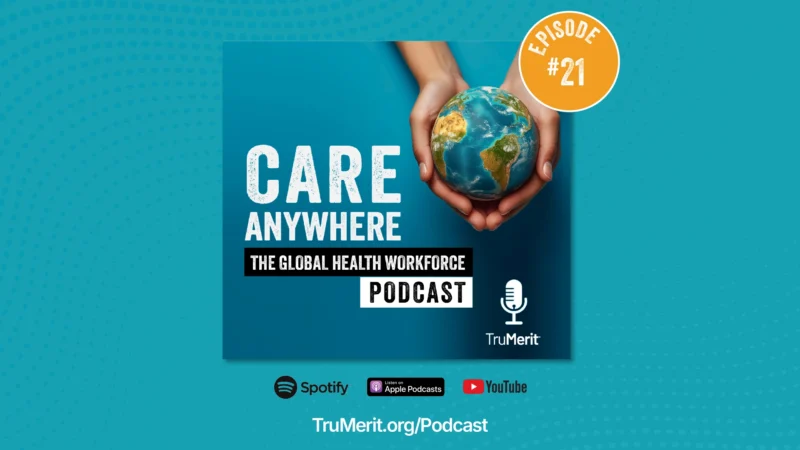
As hospitals look beyond the ICU to improve outcomes across the entire continuum of care, a key question emerges: how do you expand patient monitoring without overwhelming clinicians with more alarms, more noise, and more work? This episode—part three of a five-part Health and Life Sciences at the Edge series exploring The Future of Patient Monitoring—dives into what it will take to make continuous monitoring practical, scalable, and clinically meaningful beyond critical care. Intel’s Andrew Lamkin, AI Solutions Architect, joins Sudha Yellapantula, Senior Researcher at Medical Informatics Corp., in conversation with Michelle Dawn Mooney to unpack how analytics, wearables, and wireless infrastructure are reshaping acute care and beyond.
Yellapantula explains that today’s most advanced monitoring still lives almost exclusively in ICUs, while other hospital areas rely on infrequent spot checks. “If you go to areas where patients are generally more stable… they take a blood pressure once in eight hours,” she notes. That gap creates risk. “There are areas where you could benefit from having more continuous monitoring and you don’t. And then you miss something, and then it’s an emergency.” Expanding monitoring, however, introduces a new challenge: signal overload. Without intelligent filtering, continuous data everywhere quickly becomes noise.
The conversation centers on how analytics must evolve alongside monitoring. “If you put continuous monitoring everywhere, it’s noise,” Yellapantula explains, emphasizing that clinician attention is finite. The goal is not more data, but better prioritization. Strong analytics help zero in on the patients who truly need attention, enabling earlier intervention without burning out care teams. “Clinicians… you can only overload and damage,” she says, reinforcing the need for predictive insights rather than reactive alarms.
Lamkin and Yellapantula also explore what will actually move the needle. While wearables and wireless connectivity are essential, Yellapantula is clear that AI is the differentiator—if the data foundation is strong. “You cannot build AI without good data,” she says, pointing to the joint optimization of sensors, connectivity, and compute. Looking ahead, she envisions a future where AI offloads cognitive burden from clinicians, synthesizing patient history and signals into clear, actionable briefings. “The doctor’s focus should be more focused on the patient,” she explains, with technology accelerating insight rather than adding friction.
As the episode closes, the focus turns toward what’s coming next—from predictive alerts to ambient data capture and clinician-ready dashboards. The message is clear: expanding monitoring isn’t just about placing more sensors. It’s about building intelligent systems that surface the right insight at the right time, helping care teams move from reactive response to proactive care.
Subscribe to this channel on Apple Podcasts and Spotify to hear more from the Intel Internet of Things Group.