How to Cultivate a Healthy Company Culture with Kristen Sudela of Active Network

 

While companies succeed and fail with their product, today a healthy company can be sustained on a positive internal culture. This mindset and attitude can permeate a corporation, even one with multiple locations, and drive it to commercial success.

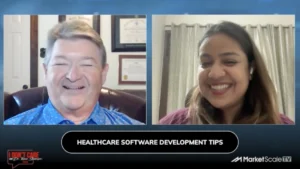
Kristen Sudela spends her days developing and fostering a healthy company culture and knows that there is a big difference between having a corporate culture and actually acting on one.

Sudela, Employee Engagement Program Manager at Active Network, knows that authenticity is an important aspect of building an effective employee engagement program.

“You have to be authentic,” she contended. “You can’t just say ‘here’s what we’re about,’ and not live that mission.”

This authenticity does not transfer from one company to another, and Sudela says quality leadership is key to finding each individual company’s unique culture.

“Culture really does come down to the people and from the top-down type of aspect,” she said. “Having people on the same page culturally, having people really understand what culture is.”

Evangelizing an employee base to advocate on the company’s behalf is among the most powerful ways to grow a company in today’s landscape, and culture is at the core of this. However, imposing a culture for culture’s sake can have detrimental effects. Sudela pointed out that a ‘fake’ corporate culture can actually hinder a company’s ability to recruit.

Dallas-based Active is a software company that enables employee activity and overall strives to make the world a more active place. The company bases its programming on the Transtheoretical Model for Behavioral Change, which allows Active to connect with employees of all levels and offer approachable, yet challenging growth options for clients.

For the latest news, videos, and podcasts in the Software & Electronics Industry, be sure to subscribe to our industry publication.

Follow us on social media for the latest updates in B2B!
Twitter – @TechMKSL
Facebook – facebook.com/marketscale
LinkedIn – linkedin.com/company/marketscale

Follow us on social media for the latest updates in B2B!

Image

Latest

transportation management
Transportation Management Systems Don’t Compete With Carriers, Brokers, or Shippers — They Align Them
February 10, 2026

Transportation management systems are undergoing a quiet but consequential shift. Once viewed primarily as tools for tracking loads and storing paperwork, modern TMS platforms are increasingly expected to function as the operational backbone of logistics organizations. As freight volumes continue to fluctuate, margins remain tight, and supply chains rely on a growing mix of…

Read More
AI adoption strategy
Five by Five Leadership: Why Purpose, Warmth, and Clarity Matter More Than Ever at Work
February 10, 2026

For the first time in history, workplaces now span five generations, forcing leaders to rethink long-standing assumptions about motivation, communication, and career growth. As Gen Z enters the workforce, they bring expectations shaped by a desire for meaningful work, clear development paths, and work-life balance—rather than traditional, one-size-fits-all career ladders. In an era marked…

Read More
Experiential
Scaling Experiential Learning at Slippery Rock University with Dr. John Rindy
February 9, 2026

Regional public universities are being asked to do more with fewer students, fewer dollars, and less margin for error—making student persistence, timely graduation, and career outcomes central institutional concerns. Under mounting enrollment pressure and a shifting labor market, experiential learning has moved from a “nice to have” to a strategic imperative. Research consistently shows…

Read More
data center workforce
The Next Data Center Bottleneck Isn’t Power or Cooling — It’s People: The Data Center Workforce
February 8, 2026

With the rapid rise of AI workloads, data centers are being built with higher power density, stricter reliability expectations, and cooling technologies that are evolving faster than most teams can adapt. As a result, these facilities aren’t just getting bigger—they’re becoming harder to operate, harder to staff, and far less forgiving when something goes…

Read More