Designing for Voice feat. Nathan Stratton of Vocinity
Businesses are turning to digital assistants and chatbots to scale communications. But chatbots and digital assistants don’t necessarily replicate a human experience or provide a good experience in all cases. However, new voice and video interfaces are bridging the gap.
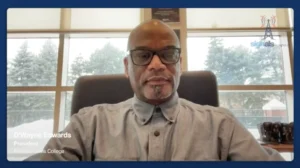
On this latest episode of Haptic Feedback, Jamie Young, Director of Product Design with Shockoe, spoke with Nathan Stratton, Founder and CTO of Vocinity, a company committed to providing conversational voice and video interfaces for businesses. Together they tackle how innovation and advancement in voice-video interfaces is driving fascinating use cases for businesses looking to automate interactions through voice.
Stratton got the idea for Vocinity, his sixth startup, after calling Amazon to route a package. “I expected to be greeted by Alexa and that they would be using conversational natural language voice interfaces.”
After researching the space, Stratton found that these voice interfaces were few and far between in business contexts. Thus, Vocinity began in the call verification space. “It was very high call volume, so we took millions of calls. It was a good stress test.”
The organization then pivoted toward voice and video, creating voice and video avatars. Vocinity now works predominantly in the retail and healthcare industries.
“One example is our work with an exercise bike manufacture. Because of COVID, they needed to answer questions about the product, so we built a bot to interact with customers.”
Stratton also spoke about improving the bots and avoiding uncanny valley. “That’s a term that means that the closer you get to human-like, the more a mind picks up that it isn’t real. We countered that by getting past the robotic sound and movement using human actors in pre-recorded video. Their mouth positioning changes to fit the words.”
While Stratton expresses that there are still challenges around improving models, Vocinity continues to innovate on their technology, with the goal of someday developing lifelike models. These may be closer than you think!