MICRODRONES HEADS DOWN UNDER TO LEARN WHAT’S UP IN THE AUSTRALIAN DRONE MARKET

A DEVELOPING INDUSTRY
Microdrones continues to grow and lead the commercial drone industry, building a footprint in Europe, Africa, North America, Latin America and Australia. In March of 2018, Darren Wilkinson joined the team to help grow the Australian market as the Microdrones Sales Manager for the Australia and New Zealand regions.
Wilkinson has been employed as a professional aerial surveyor and photogrammetrist for more than thirty years. In 2011, he got involved in the UAV industry, when the first commercial surveying UAV was released in Australia, and he has been involved in the industry ever since. Prior to working with Microdrones, Wilkinson was the Business Development Manager for Airsight Australia where he promoted the UAV industry through the transport, power, mining and built infrastructure industries.
THE MARKET DOWN UNDER
Having an extensive background in the Australian Drone market, Wilkinson offers some key insight. “One major difference is that Australia has legislated the use of small UAVs Since 2002. So by the time they became widely used commercially, around 2009-2010, we had a fairly mature market. Regulators, pilots and the public became more accustomed to drone technology. For example, back in 2012 there were only 20 holders of Remote Piloted Aircraft Operating Certificates (ReOCs) in Australia with the Australian Civil Aviation Safety Authority (CASA). Only 2 years later that number was north of 600. Today, there are more than 1300 registered operators in Australia.”
EDUCATION AND DEVELOPMENT
With the proliferation of drones in the Australian market, one of the challenges is making sure operators have a background in the industry they are serving. Wilkinson observes and addresses two challenges when it comes to some of the organizations flying drones. “First, in terms of the geospatial industry, they’re not teaching people how to be qualified to use drones in a similar fashion as they would be to use other geospatial equipment. That void is partially being filled by very good training organizations in Australia. The other thing, there are people who are not qualified geospatial professionals who are buying drones and then reporting to be surveyors. So it actually confuses the market a bit. The companies who are doing it right generally have surveyors first and pilots second.”
That’s one of the benefits of working with Microdrones. Besides offering fully integrated mdSolutions, Microdrones provides the training and support to make sure geospatial professionals have the right tools and knowledge to get the job done.

THE IDEAL MICRODRONES CUSTOMER
Wilkinson explains that ideal companies that are a good fit for a Microdrones are typically mature organizations using drones as part of their day to day business, such as a mining or civil contracting company. Or alternatively, a mature services provider such as a contracting company who conducts aerial surveying, volumetric calculations, environmental services, 3D modeling- and the like.
He explains, “We’re talking about mining, exploration, and large civil construction scenarios, where there’s a constant requirement for situational awareness, capturing orthophotography, or volumetric surveys. There’s also a huge demand opening up for asset inspection for process infrastructure in mining, oil and gas, and linear transport. Because our gear is extremely capable, and a bit more sophisticated than your average off the shelf pro consumer drone, I’ve found that more mature companies tend to understand how to leverage the technology that’s built into it.”
EXCITING DEVELOPMENTS IN AUSTRALIA
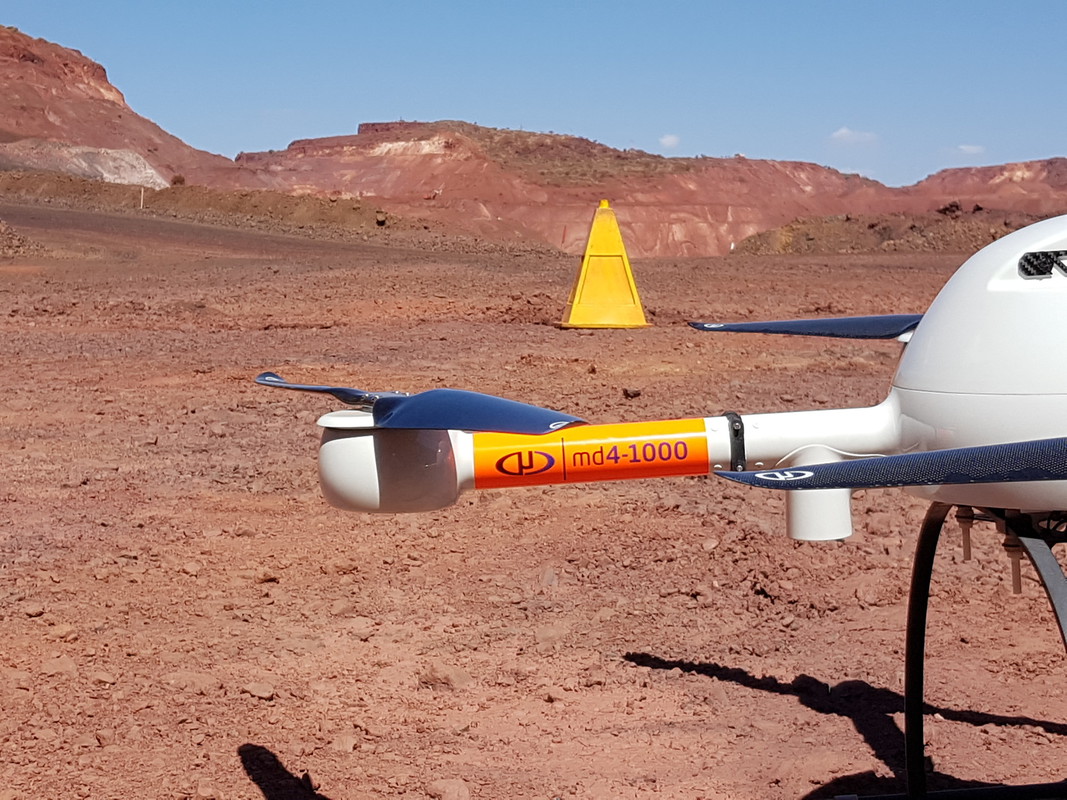
Darren notes that Microdrones products are resonating very well in the Australian market due to their size for such a relatively light aircraft. He says, “If you look at the md4-1000, its form factor allows operators to push the drone out further and still maintain visual line of sight. That’s actually something I never thought of until I got into Microdrones. It’s exciting to be part of the genesis of a brand and product that’s integrating geospatial solutions into the platform itself. Recently, we delivered an md4-3000, our biggest drone, with a PhaseOne camera integrated. We’ve got some other big news and announcements which will be coming out in the next few months and the market is very much looking forward to those.”
Interested in making drones a part of your work? Start a conversation with our team of professionals now.
Read more at microdrones.com