Helping Drones Communicate with Joseph Camp, Ph.D., Associate Professor of Electrical Engineering at SMU

 

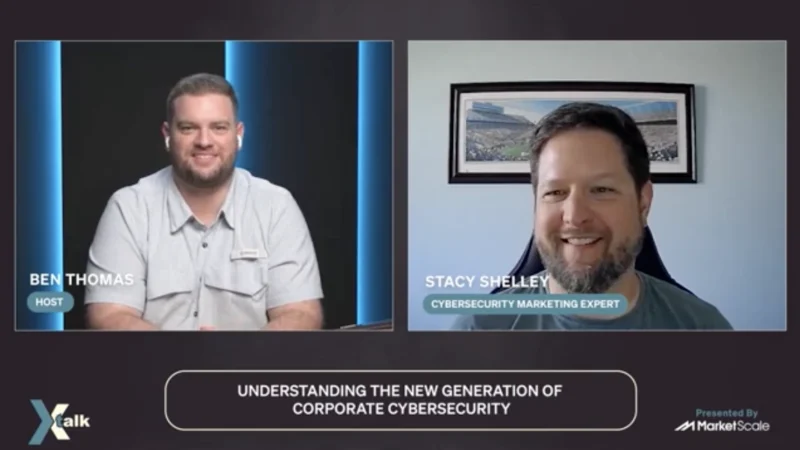
Finding a good WiFi signal is becoming a common, daily concern, as our smart devices multiply, especially in the commercial world. Dropping a connection while checking Instagram is not exactly a catastrophe. Losing connection to a drone flying over a disaster area is another story. On today’s podcast, our host spoke with Professor Joseph Camp Ph.D., Associate Professor of Electrical Engineering at SMU’s Lyle School of Engineering. After receiving an $850,000 grant from the National Science Foundation to find innovative solutions to improve drone communication, Camp and his team are working toward infrastructure for three-dimensional drone connectivity.

On the podcast, Camp discussed the difference between 2D and 3D communication, the challenge of weight to energy ratio, and the reality of using drones to help solve ground-based network outages during a crisis. “What we found was that, unlike the 2 dimensional communication that we’re used to, we noticed that when we took the drone up to a certain height, that directly below the drone we were having no connectivity to that ground,” Camp said. “And this happened only about 60 feet in the air that we started to experience this effect.”

For the latest news, videos, and podcasts in the Pro AV Industry, be sure to subscribe to our industry publication. A new episode of the Pro AV Show drops every Thursday.

Follow us on social media for the latest updates in B2B!

Twitter – @ProAVMKSL
Facebook – facebook.com/marketscale
LinkedIn – linkedin.com/company/marketscale

Follow us on social media for the latest updates in B2B!

Image

Latest

technology
Clarity Under Pressure: Technology, Trust, and the Future of Public Safety
February 7, 2026

When something goes wrong in a community—a major storm, a large-scale accident, a violent incident—there’s often a narrow window where clarity matters most. Leaders must make fast decisions, responders need to trust the information in front of them, and the systems supporting those choices have to work as intended. Public safety agencies now rely…

Read More
weather Intelligence
Clarity in the Storm: Weather Intelligence, GIS, and the Future of Operational Awareness
February 6, 2026

For many organizations today, weather has shifted from an occasional disruption to a constant planning factor. Scientific assessments show that extreme weather events—including heatwaves, heavy rainfall, and wildfires—are occurring more frequently and with greater intensity, placing growing strain on infrastructure, utilities, and public services. As weather-related disruptions become more costly and harder to manage,…

Read More
AI in sterile processing
AI in Sterile Processing Is Proving Its Value by Acting as a Co-Pilot, Not a Replacement
February 5, 2026

Sterile processing departments are dealing with persistent operational pressures. Surgical case volumes are rising, instruments are more complex, and staffing shortages remain across many health systems. Accuracy and documentation requirements continue to tighten, leaving little room for error. In busy hospitals, sterile processing teams may handle 10,000 to 30,000 surgical instruments per day, with…

Read More
IC-SAT100
Meet IC-SAT100, a Satellite PTT Radio Built for the World’s Most Demanding Environments
February 5, 2026

Let’s have a look at Icom’s IC-SAT100, a satellite Push-To-Talk radio designed for moments when ordinary communication just isn’t an option. Powered by the Iridium satellite network, this rugged handheld delivers instant one-to-many communication at the push of a button—no cell towers or ground infrastructure required. Built to thrive in harsh environments, it’s waterproof,…

Read More