Vertical Take Off Gains Altitude

On January 31, 2018, European aerospace giant Airbus completed a successful full-scale flight test of its autonomous electric VTOL Vahana aircraft in Pendleton, Oregon.
Airbus’ Silicon Valley experimental division, A³, transformed a concept sketch on a napkin to a viable aircraft, dubbed Alpha One, in less than two years. During its inaugural flight, the Alpha One reached a height of 16 feet and hovered for 53 seconds prior to completing a safe descent. Achieving a revolutionary milestone in advancing global urban air motility, this historic accomplishment was witnessed not only by the Vahana team and A³ leadership, but the FAA as well.
“Today we are celebrating a great accomplishment in aerospace innovation,” Zach Lovering, Project Executive of Vahana, remarked. “Our aim has long been to design and build a single passenger electric VTOL self-piloted aircraft that will answer the growing need for urban mobility.”
According to Rodin Lyasoff, A³ CEO and former Project Executive of Vahana, “Vahana’s first flight demonstrates Airbus’ unique ability to pursue ambitious ideas quickly, without compromising the quality and safety for which the company is well-known. For A³, it proves that we can deliver meaningful innovation with aggressive project timetables, to provide a real competitive advantage for Airbus,”
To get these planes to market by 2020, the Vahana team is following up this triumphant success by gearing up for continued development and additional testing, including forward flight and transitions. Vahana’s goal: To democratize personal flight and answer the growing need for urban mobility by leveraging the latest technologies in electric propulsion, energy storage, and machine vision.


Follow us on social media for the latest updates in B2B!

Image

Latest

Denial Data
Turning Denial Data Into Action: How Healthcare Organizations Can Fight Back Against Payer Denials
March 5, 2026

Healthcare providers across the U.S. are facing a growing wave of claim denials that is putting pressure on already strained hospital finances. Industry research from the American Hospital Association shows that nearly 15% of medical claims submitted to private payers are initially denied, forcing hospitals and health systems to spend about $19.7 billion annually attempting…

Read More
Jabra
ISE 2026: Jabra Unveils Scalable Room Solutions for the Hybrid Workplace
March 5, 2026

At ISE 2026, Jabra highlighted how meeting technology is evolving to support the realities of hybrid work, where the experience must be equally effective for people inside and outside the room. In a conversation with Craig Durr, Chief Analyst and Founder of The Collab Collective, Jabra’s VP of Video Product Olly Henderson explained that…

Read More
Marketing AI Pulse
The Marketing AI Pulse Brief for Feb 2026: Trust in the World of LLM Ads, OpenClaw, Reddit & More!
March 3, 2026

Starting in 2026, The Marketing AI SparkCast alternates between the Marketing AI Pulse Monthly Brief and in-depth interviews with leading marketing AI innovators. This episode is the February 2026 edition of the Monthly Brief and focuses on trust and authenticity in an AI-driven world. Aby Varma and Matt Cyr explore the emergence of advertising inside…

Read More
student visibility
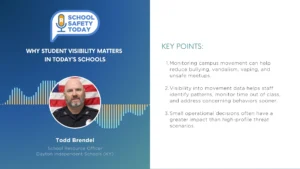
Why Student Visibility Matters in Today’s Schools
March 3, 2026

School Safety Today podcast, presented by Raptor Technologies. In this episode of School Safety Today by Raptor Technologies, host Dr. Amy Grosso interviews SRO Todd Brendel of Dayton Independent Schools (KY), who shares frontline insights on the importance of knowing where students and staff are throughout the school day. He explains how they manage…

Read More