
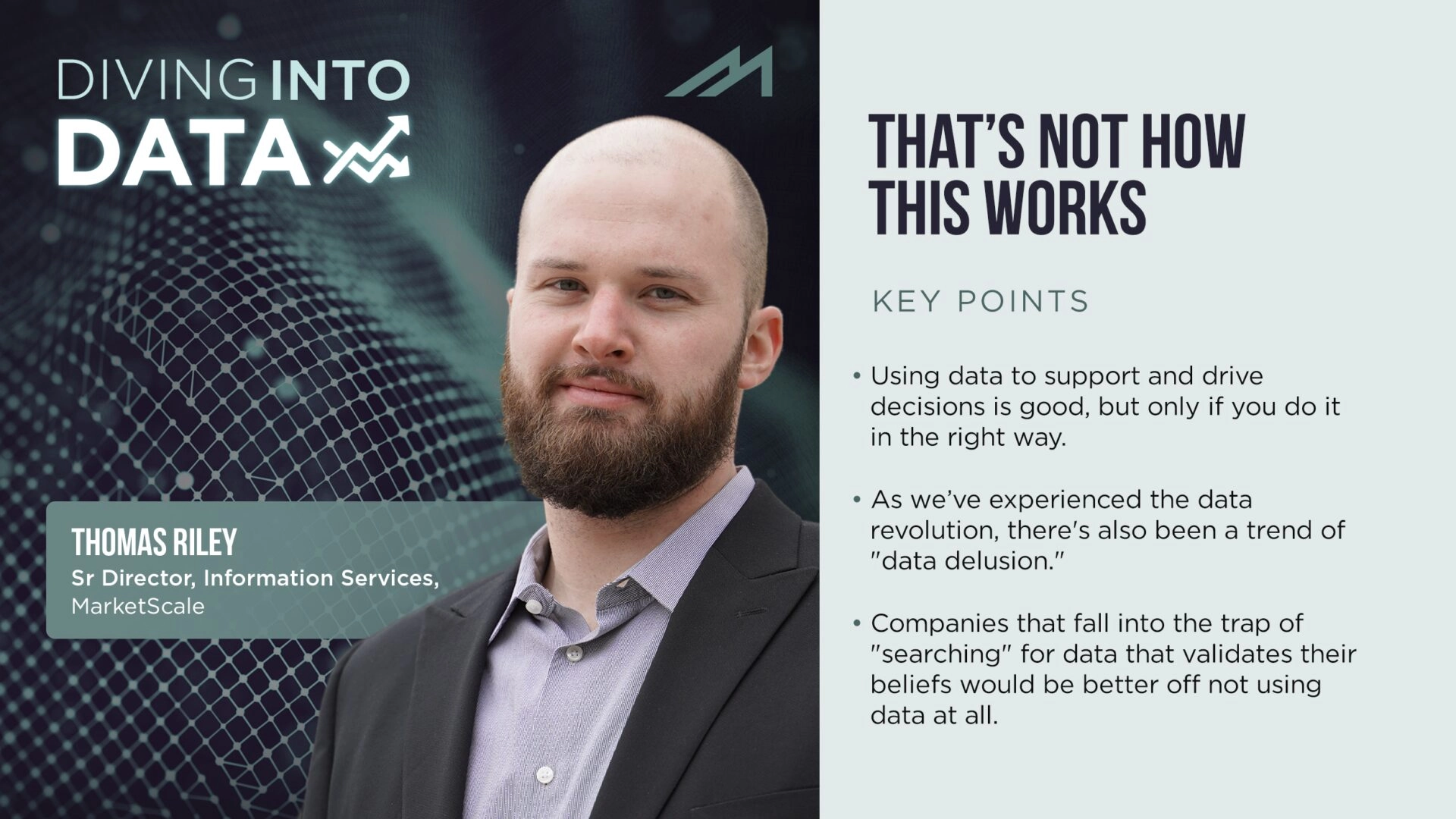
That’s Not How Data Works
Data drives decisions of the worlds largest companies but in a world with constant data, how do you make sense of it? Host TC Riley, puts the world under the lens of data and analytics and explores current news, B2B trends, and popular topics.
Data is a tremendous asset. However, as a recent Harvard Business Article about the near future of work highlighted, using data inappropriately can delegitimize your entire argument.
Using data to support and drive decisions is good; but only if you do it in the right way — in fact, data used the wrong way is more dangerous than not using it at all.
Throughout the article, as is typical of HBR, great research data, mainly from Gartner, is used to support overall points. However, two specific points demonstrate a lack of data understanding and don’t connect to the central message and prediction.
Let’s take a look:
- 68% of employers added 1+ wellness benefit during pandemic, so companies will implement collective mental health days
- 33% more skills listed on job postings vs. 2017, so employees won’t focus on upskilling employees and instead will look to hire those skills or ‘rent employees’
Though host Thomas Riley uses this article for an example on this episode of Diving into Data, he said he sees the phenomenon everywhere, all the time.
The takeaway is this: don’t fall into the trap that the author did and think that quoting valid data automatically validates your argument. Data can provide so many insights and be so powerful for any organization, but only if you’re cautious about it and use it the right way.
“Data is really cool and can tell you a lot of really cool things. Just don’t let it confuse you into thinking things are there that aren’t really there,” he said.
Catch up on all episodes of Diving Into Data!
Latest Episodes

From Measuring Memory to Measuring Thinking: How Simulation-Based Learning Could Reshape Higher Education
As artificial intelligence continues reshaping the workforce, higher education faces growing pressure to demonstrate its value beyond content mastery. According to the World Economic Forum’s Future of Jobs Report, employers expect 39% of workers’ core skills to change or become outdated by 2030, while 69% identify analytical thinking as the most essential workforce skill. As…
The Future of the Trades Depends on Mentorship and Industry Veterans Passing Down the Craft
Across the United States, industries are grappling with a skilled labor shortage. According to industry research, millions of trade jobs are expected to go unfilled in the coming years as experienced workers retire faster than new ones enter the field. At the same time, trade school enrollment has steadily increased. The conversation around skilled trades—once…

From Power Shopping to Place-Making: Tanger’s Stephen Yalof on the New Outlet Experience
For decades, the outlet trip had a familiar rhythm: get in the car, drive beyond the city, hunt for deals and come home with bags full of discounted finds. But that old model is giving way to something more layered. As retailers reinvest in store experiences to give consumers more reasons to visit, outlet…
Latest
From Measuring Memory to Measuring Thinking: How Simulation-Based Learning Could Reshape Higher Education
As artificial intelligence continues reshaping the workforce, higher education faces growing pressure to demonstrate its value beyond content mastery. According to the World Economic Forum’s Future of Jobs Report, employers expect 39% of workers’ core skills to change or become outdated by 2030, while 69% identify analytical thinking as the most essential workforce skill. As…
The Future of the Trades Depends on Mentorship and Industry Veterans Passing Down the Craft
Across the United States, industries are grappling with a skilled labor shortage. According to industry research, millions of trade jobs are expected to go unfilled in the coming years as experienced workers retire faster than new ones enter the field. At the same time, trade school enrollment has steadily increased. The conversation around skilled trades—once…
From Power Shopping to Place-Making: Tanger’s Stephen Yalof on the New Outlet Experience
For decades, the outlet trip had a familiar rhythm: get in the car, drive beyond the city, hunt for deals and come home with bags full of discounted finds. But that old model is giving way to something more layered. As retailers reinvest in store experiences to give consumers more reasons to visit, outlet…
How Relationships Build a Career, Deepen Service and Define Purpose
In a workplace still shaped by hybrid schedules, remote communication and shifting expectations around professional growth, relationships have become more than a soft skill — they are a career advantage. Gallup’s latest workplace reporting shows that global employee engagement has fallen to 20%, reflecting a broader challenge for organizations trying to keep people connected,…