Can We Improve The RFP Process For Online Learning Platforms?

The COVID-19 pandemic threw a lot of new scenarios at the world. One of those forced us to move school to an at-home, online model. As the world opens back up and schools start to go back, what does that mean for the world of online learning? Will schools use a hybrid model, or will online learning disappear?

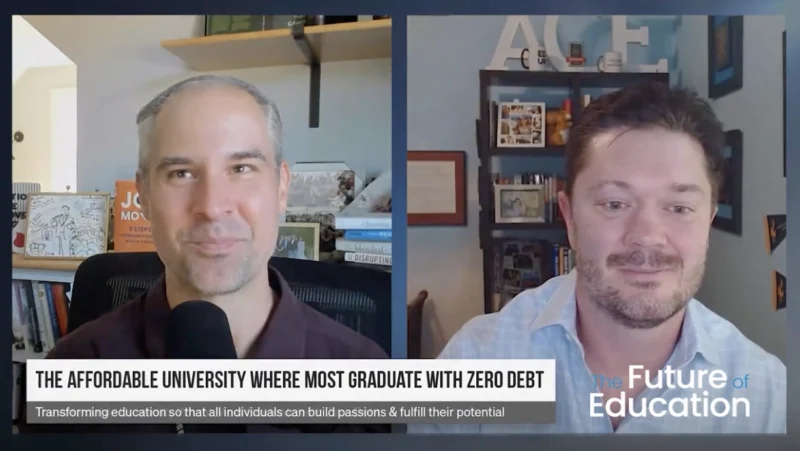
Voice of B2B, Daniel Litwin talked with Thomas Waite, Ph.D., President & CEO of K16 Solutions, on Marketscale TV about online learning and how schools and educators can adjust to the new world.

Online learning is not likely to go away anytime soon, if ever. The online learning market is expected to scale to $21 billion over the next two years, according to research from ThinkImpact. The U.S. currently owns 34 percent of online learning platforms and 43 percent of the online academic market share. With online learning here to stay, educators will have to adjust to online and hybrid models.

“It exposed education, that maybe certain sectors were behind in online learning technology,” Waite said, regarding the transition to online learning models last year during COVID. “We maybe should have been more prepared.” He noted that some schools were and some were not.

According to Waite, learning can occur online or in person, but it’s dependent on the effort put forward. He heard stories from students during the pandemic that weren’t during their reading. He asked if they would do it if they were in class, and they said ‘yes.’ To him, learning can take place anywhere, as long as the important stuff is taken care of, like writing and reading.

“The fundamentals of education don’t change,” Waite said.

Follow us on social media for the latest updates in B2B!

Twitter – @MarketScale
Facebook – facebook.com/marketscale
LinkedIn – linkedin.com/company/marketscale

Follow us on social media for the latest updates in B2B!

Image

Latest

career
Stop Chasing Titles, Build a Career That Matters – From a CAO
March 11, 2026

Career advice in finance and accounting often centers around promotions, titles, and compensation. But in an era where professionals frequently change jobs every few years—the average American worker now stays in a role less than four years—industries are facing growing talent shortages and reevaluating what long-term career success looks like. The question many professionals are…

Read More
Career success
A CEO’s Blueprint for Career Success: Leading with Love to Drive Performance and Culture
March 10, 2026

Leadership right now feels heavier than it did just a few years ago. Teams are stretched, expectations are high, and many employees are quietly disengaged. In fact, Gallup’s 2025 U.S. data shows that only about 31% of employees are actively engaged at work, leaving the majority feeling disconnected or indifferent. For CEOs and senior…

Read More
employer-sponsored apprenticeships
The Degree That Pays You Back: How Employer-Sponsored Apprenticeships Are Rewriting Higher Ed
March 9, 2026

Higher education is under pressure. Over the past few years, public confidence in the value of a four-year degree has declined significantly, with fewer Americans expressing a strong belief that traditional higher education delivers a worthwhile return on investment. At the same time, employers consistently report that graduates lack job-ready skills—particularly the “durable skills”…

Read More
Denial Data
Turning Denial Data Into Action: How Healthcare Organizations Can Fight Back Against Payer Denials
March 5, 2026

Healthcare providers across the U.S. are facing a growing wave of claim denials that is putting pressure on already strained hospital finances. Industry research from the American Hospital Association shows that nearly 15% of medical claims submitted to private payers are initially denied, forcing hospitals and health systems to spend about $19.7 billion annually attempting…

Read More