Leaving the SAT Behind and Reshaping Professional Tutoring & Test Prep Work

The Fiske Guide to Colleges announced it would no longer report SAT or ACT scores. As one of the most trusted college guides, the move comes amid a flurry of institutions deciding they will also ignore the scores, at least for 2021. Research from FairTest shows 1,700 schools make the scores optional for prospective students in the Fall of 2021.

This is just the tip of the iceberg. Why are more and more institutions opting out of the test?

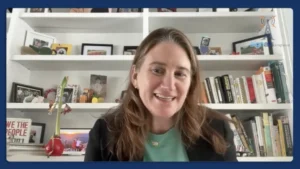
Voice of B2B, Daniel Litwin talked on Marketscale TV with Allen Koh, CEO of Cardinal Education; Rachel Coleman, Co-Founder of College Essay Editor; and Anna Moss, Founder of Mind the Test.


“There is [currently] no good substitute for the SAT and ACT.” – Allen Koh, CEO of Cardinal Education

“Well, this year, we’re seeing a huge, huge increase in test-optional schools, and the obvious reason is due to the COVID-19 Pandemic,” Moss said. She noticed students had to go to great lengths to take the test, which isn’t always feasible. According to Moss, many schools decided to postpone and see what happens after the pandemic.

With schools going test-optional, it is having quite an impact on the admissions process. Koh believes that some of it is temporary, as well, but folks have been thrown into a bit of a powderkeg nonetheless.

“The impact is absolute chaos, frustration, insecurity, and anxiety,” Koh said. “There is no good substitute for the SAT and ACT.”

Some schools opted to do it before the pandemic, but for more philosophical reasons. According to Coleman, they already had a plan in place, and when the pandemic hit, they were already test-optional. But, for the schools that had to scramble and change policies on a dime, it caused many headaches.

Follow us on social media for the latest updates in B2B!

Twitter – @MarketScale
Facebook – facebook.com/marketscale
LinkedIn – linkedin.com/company/marketscale

Follow us on social media for the latest updates in B2B!

Image

Latest

skilled trades mentorship
Why Leadership Without Humanity Is Failing Today’s Workplace
March 24, 2026

As the world faces historic labor shortages, an increase in burnout, and record-high turnover, organizations are confronting a leadership reckoning. In May 2024, Gallup found that more than 50 percent of U.S. employees were actively searching for new jobs or watching for openings. Taken together, these trends signal a clear and growing breakdown in…

Read More
Joint Commission 360
Understanding Joint Commission 360 Standards: What They Mean for SPD Teams (Part 2)
March 23, 2026

Healthcare teams today are feeling the pressure to move beyond last-minute compliance and instead build processes that work consistently every day. That shift is especially clear in sterile processing departments (SPDs), where the Joint Commission 360 model is redefining what “survey readiness” really means. With patient safety directly tied to instrument quality—and studies consistently…

Read More
teacher
Building the Next Generation of Educators Through Apprenticeship Pathways and Workforce-Aligned Training
March 23, 2026

Teacher shortages aren’t exactly a new headline—but lately, they’ve started to feel a lot more urgent. In some places, schools have gone years without enough fully trained teachers in the classroom, exposing real flaws in how we prepare and retain educators. Add in the rising cost of becoming a teacher and training models that haven’t…

Read More
Joint Commission 360
Understanding Joint Commission 360 Standards: What They Mean for SPD Teams (Part 1)
March 17, 2026

For a long time, compliance in healthcare was tied to the survey cycle. Now, that model is shifting. With the introduction of Joint Commission 360, organizations are being asked to demonstrate continuous performance—not just preparedness. As patient safety comes under increasing scrutiny, The Joint Commission is moving toward an approach built on real-time data, traceability,…

Read More