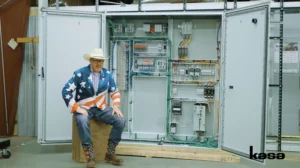
Volta Knowledge: Electrical Asset Health

Darcy Tangedal, a Reliability Specialist at Volta Insite, stopped by Volta Knowledge to provide insights on electric submersible pumps.

Tangedal said one of the main challenges with electric submersible pumps (ESPs) is that they don’t last long. “They operate somewhere between 450-800 degrees, and it’s a half a million dollars per install,” Tangedal said. “The pump/motor combination is two hundred and fifty to three hundred thousand dollars. And the install is worth about two hundred thousand dollars. They’re very expensive, and they use about seven days’ production installing them.”

With this type of investment, it’s critical to have an online monitoring system, like Volta’s, to predict failures. And when these types of systems shut down for maintenance, ESPs are known to fail. The problem is, according to Tangedal, operators don’t know which ESP is going to fail when they start back up. “But with the (Volta) Insight node, you’d have some great indications of which ones are close to failing,” Tangedal said.

Another advantage of the Volta system is when an ESP does fail, which is usually difficult to detect, Volta recognizes the failure, captures the information, and reports it to the customer.

In troubleshooting maintenance issues with ESPs, the Volta Insite also monitors the pump’s VFD (variable frequency drive), which saves time pinpointing exactly where the failure point is in the pump system. “There’s a huge saving there in maintenance cost, downtime, productivity,” Tangedal said. “It’s all about transparency and providing information that can be utilized immediately rather than waiting for hours or days.

Follow us on social media for the latest updates in B2B!

Image

Latest

Leadership
Leading Change from Within: The Power of Transformational Leadership
February 7, 2026

Leadership is being tested in real time. As organizations navigate AI adoption, remote work, and constant structural change, many leaders are discovering that strategy alone isn’t enough. People are asking deeper questions about purpose, trust, and what it really means to show up for teams when uncertainty is the norm. In a world where burnout…

Read More
technology
Clarity Under Pressure: Technology, Trust, and the Future of Public Safety
February 7, 2026

When something goes wrong in a community—a major storm, a large-scale accident, a violent incident—there’s often a narrow window where clarity matters most. Leaders must make fast decisions, responders need to trust the information in front of them, and the systems supporting those choices have to work as intended. Public safety agencies now rely…

Read More
weather Intelligence
Clarity in the Storm: Weather Intelligence, GIS, and the Future of Operational Awareness
February 6, 2026

For many organizations today, weather has shifted from an occasional disruption to a constant planning factor. Scientific assessments show that extreme weather events—including heatwaves, heavy rainfall, and wildfires—are occurring more frequently and with greater intensity, placing growing strain on infrastructure, utilities, and public services. As weather-related disruptions become more costly and harder to manage,…

Read More
AI in sterile processing
AI in Sterile Processing Is Proving Its Value by Acting as a Co-Pilot, Not a Replacement
February 5, 2026

Sterile processing departments are dealing with persistent operational pressures. Surgical case volumes are rising, instruments are more complex, and staffing shortages remain across many health systems. Accuracy and documentation requirements continue to tighten, leaving little room for error. In busy hospitals, sterile processing teams may handle 10,000 to 30,000 surgical instruments per day, with…

Read More