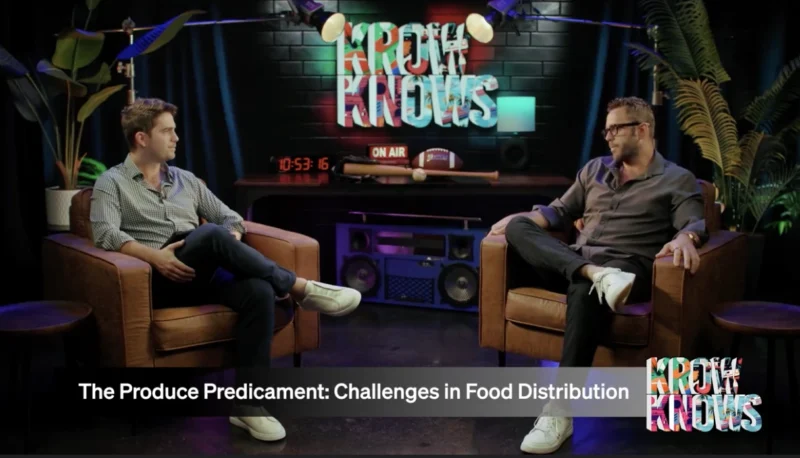
Cooler News: The Grocery Revolution & How Online Grocery Fulfillment is Changing the Game
Change is part of every industry. The grocery industry is no different. Evolution has become necessary, mostly driven by customer preferences. The grocery shopping experience is evolving with the support of technology. To chat about this new segment of the market is Joe McMenamin, business development for grocery fulfillment at KPS Global, a leading manufacturer of insulated panel systems.
The grocery business is competitive, so retailers have to evolve, and part of that is automation. According to McMenamin, “Automation is essential to grocery store’s future. Automation isn’t a bad thing. Tasks that don’t require a human mind and can be processed more efficiently this way.”
The grocery shopping experience involves automation and technology like it never has before. While younger generations and digital natives have been quick to adopt the convenience of ordering groceries online and picking them up or having them delivered; it’s also helped older generations. “Baby boomers are embracing it as well, and they benefit greatly from it since they may not be able to shop themselves,” McMenamin said.
Ultimately, grocery fulfillment is mostly about saving time, which is a precious commodity. Most households are very busy with working parents and active kids. Who has time to shop? “The amount of time a family can save through grocery fulfillment is a real game-changer, and just shows how the customer is driving this revolution,” McMenamin commented.
In addition to retailers adapting, there are also new industries infiltrating the market that are helping deliver a better solution with technology such as robotics. “Grocery stores have to adapt when it comes to grocery fulfillment, and they need partners. Walmart and Amazon are leading the way. This change is good. It’s good for the end-user and the retailers,” McMenamin shared.
For the latest news, videos, and podcasts in the Food & Beverage Industry, be sure to subscribe to our industry publication.
Follow us on social media for the latest updates in B2B!
Twitter – @FoodMKSL
Facebook – facebook.com/marketscale
LinkedIn – linkedin.com/company/marketscale