English Proficiency: Opening Doors to International Health Careers
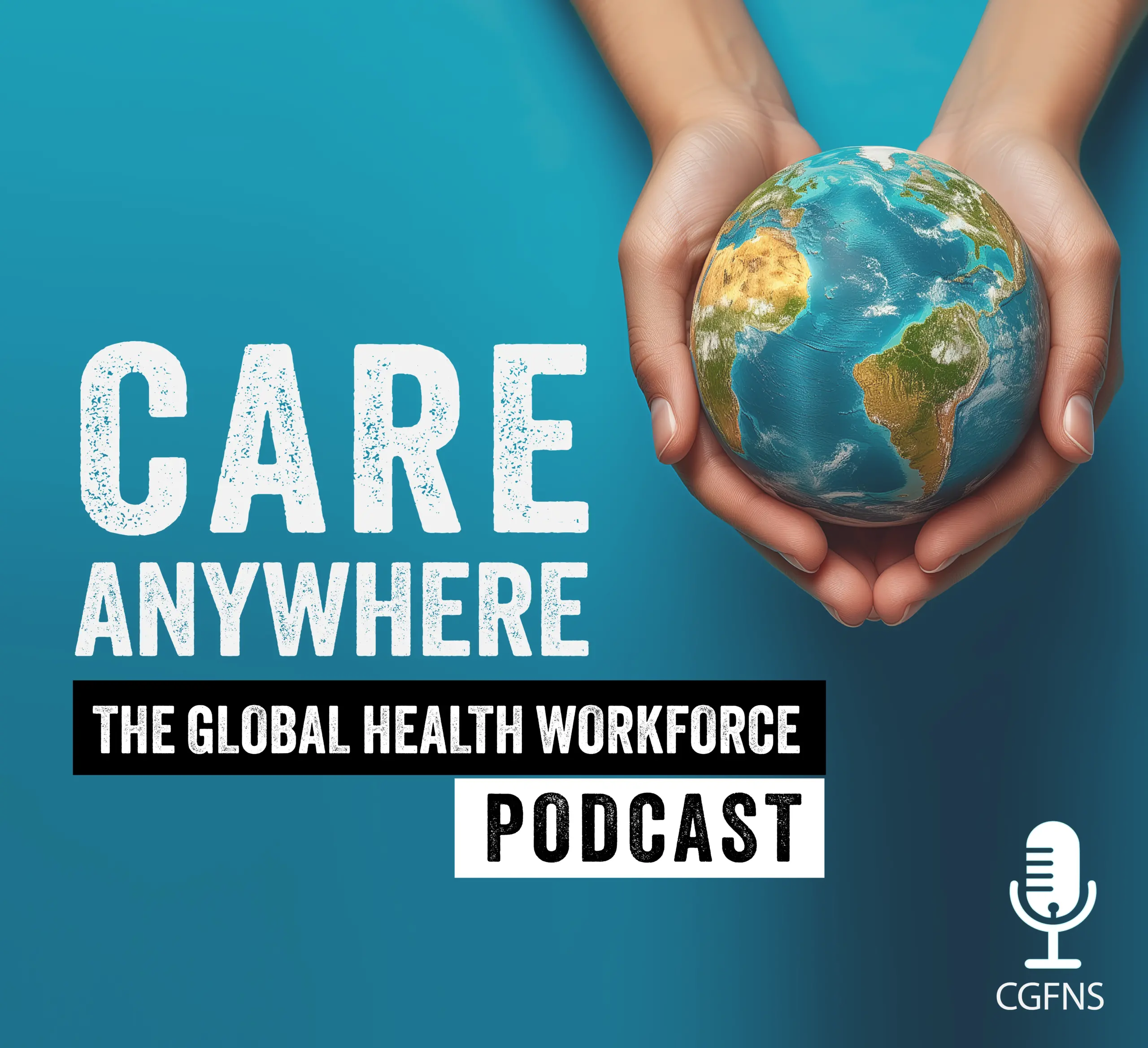
In this special episode of Care Anywhere: The Global Health Workforce Podcast, host Lea Sims, Chief Marketing Officer and Host at CGFNS International, dives deep into the critical role of English language proficiency in global healthcare workforce mobility. Joined by guest Spiros Papageorgiou, Principal Measurement Scientist at ETS, the discussion unpacks how language proficiency benchmarks are set, their role in career mobility, and the human impact of these assessments.
Spiros brings unique insights, drawing from his extensive experience with ETS’s renowned proficiency tests like TOEFL. He underscores that while language proficiency is necessary for success, it’s not sufficient on its own. Factors such as cultural adaptation, professional expertise, and social support also significantly influence outcomes. Highlighting the nuanced process of setting cut scores, Spiros emphasizes the balance between ensuring safety in high-stakes fields like healthcare and creating opportunities for global health workers.
Lea and Spiros explore how proficiency testing must align with real-world demands, particularly in healthcare, where communication varies across patient care, team collaboration, and critical decision-making. They discuss the importance of continuous upskilling in language proficiency, not only for career success but also for fostering social integration and building meaningful connections in new environments.
This episode offers actionable advice for internationally educated nurses and healthcare workers. Spiros encourages leveraging modern resources such as language apps, subtitles, and immersive experiences to enhance proficiency. Lea concludes with an empowering reminder: minimum proficiency is the starting line, not the finish line—fluency should be the ultimate goal.
For anyone navigating the challenges of career mobility in healthcare, this episode provides a thoughtful, empathetic, and practical perspective on the intersection of language, opportunity, and global workforce development. Tune in to hear how proficiency assessments are not just regulatory hurdles but critical enablers of a resilient and skilled global health workforce.