Before, During, and After: How the Hospitality Industry has Reacted to the Pandemic

 

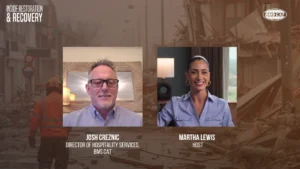
The hospitality industry revolves around interpersonal interactions—or so it seemed. Marti Winer, Vice President of MGM Resort Events Production, spoke with Experiential Experts hosts Lorre Crisswell and Holly Zalenski about how the industry has changed since the pandemic.

One significant business change is slower decision-making, partly due to the need for flexibility. For example, businesses may not be able to commit to the number of people attending an event or decide whether there will be a virtual option until right before the event. Thus, flexibility is key for the industry.

Customers have mixed, heightened emotions, so the hospitality workers need to meet them at their level. “Everybody’s answer is the right one for them. And we need to accommodate that,” Winer emphasized. She added that everyone had a remote and the option to change the media around them throughout the pandemic, which is not the case with live content.

“The whole shared experience of watching something simultaneously and participating in the rise and fall of emotion, or learning, etcetera, is on that we will really have to take into account in that customer experience as we start to really curate and orchestrate what upcoming events look like.”

The pandemic did result in positive changes for hospitality as well. Ubiquitous content access created thought and geographic diversity. Additionally, the pandemic revealed that current workers persevered and showed they have true dedication and passion for the industry.

Follow us on social media for the latest updates in B2B!

Image

Latest

technology
Clarity Under Pressure: Technology, Trust, and the Future of Public Safety
February 7, 2026

When something goes wrong in a community—a major storm, a large-scale accident, a violent incident—there’s often a narrow window where clarity matters most. Leaders must make fast decisions, responders need to trust the information in front of them, and the systems supporting those choices have to work as intended. Public safety agencies now rely…

Read More
weather Intelligence
Clarity in the Storm: Weather Intelligence, GIS, and the Future of Operational Awareness
February 6, 2026

For many organizations today, weather has shifted from an occasional disruption to a constant planning factor. Scientific assessments show that extreme weather events—including heatwaves, heavy rainfall, and wildfires—are occurring more frequently and with greater intensity, placing growing strain on infrastructure, utilities, and public services. As weather-related disruptions become more costly and harder to manage,…

Read More
AI in sterile processing
AI in Sterile Processing Is Proving Its Value by Acting as a Co-Pilot, Not a Replacement
February 5, 2026

Sterile processing departments are dealing with persistent operational pressures. Surgical case volumes are rising, instruments are more complex, and staffing shortages remain across many health systems. Accuracy and documentation requirements continue to tighten, leaving little room for error. In busy hospitals, sterile processing teams may handle 10,000 to 30,000 surgical instruments per day, with…

Read More
IC-SAT100
Meet IC-SAT100, a Satellite PTT Radio Built for the World’s Most Demanding Environments
February 5, 2026

Let’s have a look at Icom’s IC-SAT100, a satellite Push-To-Talk radio designed for moments when ordinary communication just isn’t an option. Powered by the Iridium satellite network, this rugged handheld delivers instant one-to-many communication at the push of a button—no cell towers or ground infrastructure required. Built to thrive in harsh environments, it’s waterproof,…

Read More