Top 10 Shifts That CMO and Marketing Leaders Should Plan for in 2026 and Beyond
In this January episode of The Marketing AI SparkCast, host Aby Varma, founder of Spark Novus, which partners with marketing leaders to integrate AI responsibly and strategically, introduces a new recurring format called Marketing AI Pulse Monthly Brief. The purpose of this format is to cover the latest and most meaningful developments in AI and marketing so leaders can maintain a real-time pulse on what is happening.
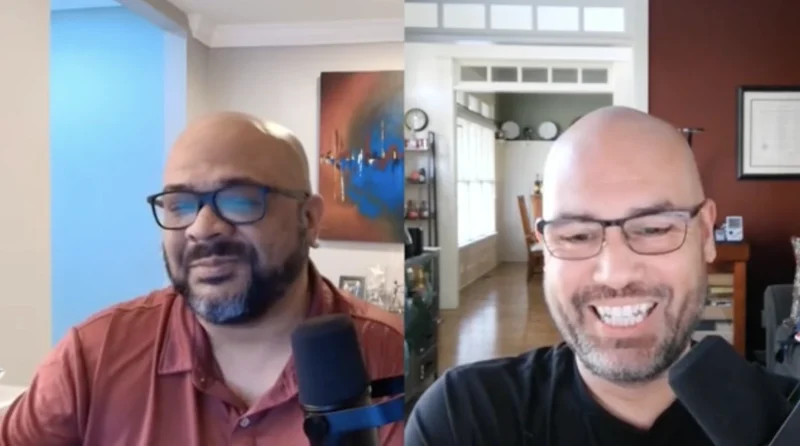
Aby is joined by co-host Matt Cyr, founder of Loop AI and an MIT Sloan-certified AI strategist. Together, they break down the top ten shifts that CMOs and marketing leaders should plan for in 2026 and beyond, drawing on real-world examples across agencies, brand strategy, search, creative, MarTech, paid media, analytics, and organizational leadership.
Topics Covered
- #1 CMO and agency relationships fundamentally change: Agency platforms like WPP Open shift the relationship from behind-the-curtain execution to open collaboration, where trust moves from making assets to helping CMOs decide what matters, and deep business understanding outweighs production.
- #2 Brand discovery begins to shift with the rise of generative search and GEO: Buyers increasingly skip traditional search and rely on LLM interfaces and embedded assistants, forcing CMOs to audit how their brand appears in AI answers, make websites AI-readable, and actively shape third-party signals where AI learns context.
- #3 AI agents move from helpers to workflow owners: Agents are not ready for hands-off automation, but when designed with clarity, clean inputs, defined success criteria, and human oversight, they can take ownership of high-friction workflows and free teams to focus on judgment and strategy.
- #4 AI accelerates the next era of creative applications in image and video: Advances in image and video models remove production constraints, turning creative work into a system of rapid iteration where guardrails, workflow design, and human taste become more important than asset creation itself.
- #5 AI increasingly becomes marketing infrastructure rather than point solutions: The value of AI shifts from isolated tools to shared context across systems, making governance, clean data, integration, and institutional memory essential parts of the marketing stack.
- #6 Advertising and paid media platforms expand platform-led optimization and automation: Platforms like Google, Meta, Albert.ai, and AI-powered answer environments automate more of the execution layer, pushing CMOs to shift from campaign control to input quality, modular creative design, and outcome-based measurement.
- #7 Marketing analytics moves toward narrative and conversational insight: AI enables marketers to interact with data in plain language and derive clarity at moments of decision, but only if foundational work around data hygiene, aggregation, and organization is in place.
- #8 AI-enabled browsers begin influencing how users navigate the web: Agentic and AI-first browsers increasingly summarize, compare, and filter content before users ever visit a site, requiring brands to structure content so positioning and proof survive AI interpretation.
- #9 Marketing leaders begin managing humans and AI systems together: Some organizations already treat AI systems as operational resources with ownership and KPIs, forcing leaders to balance managing people and machines while knowing when to trust automation and when to intervene.
- #10 Human judgment becomes the most valuable bottleneck: As AI removes constraints on speed and scale, differentiation shifts to decision quality, taste, ethics, and governance, making human judgment the defining advantage for marketing leaders in 2026 and beyond.
Matt Cyr is the founder of Loop AI and an MIT Sloan-certified AI strategist with deep experience leading digital marketing and AI initiatives across healthcare, higher education, and agency environments. He focuses on integrating AI into existing strategies while helping organizations move from experimentation to practical, execution-driven adoption that delivers real business impact.
🔗 https://www.linkedin.com/in/matthewfcyr
Aby Varma is a global business and marketing leader and the founder of Spark Novus. He guides business and marketing executives through their AI journey—from early adoption to long-term self-reliance—in a strategic and responsible way that supports innovation and business growth. Aby is the host of The Marketing AI SparkCast podcast and creator of the Marketing AI Pulse community platform. He also serves as Head of Marketing for TEDxAtlanta and is a member of the Forbes Communications Council.
🔗 https://www.linkedin.com/in/abyvarma/