Fusion: How Control Room Design Impacts an Evolving Energy Industry

On today’s MarketScale Pro AV podcast, we are joined by Electrosonic Pre-Sales and Design Engineer Doug Walker and Project Manager Bob Mann for a conversation on extended control room design. Control rooms are integral to companies that make mission-critical decisions daily.
As Walker points out, the term “control room” does not mean the same thing to everyone, so the first thing that the technicians and engineers at Electrosonic do is begin by defining what that actually is and means to each individual client.
For some, it could be a room with dials and valve switches and very physical devices, and for others, it could be a flight control room or be very software driven.
“In the oil and gas industry, they’ve seen the control room attached to what it’s actually controlling, which can often be on a rig, or in a very hostile location, so with improved connectivity and better control rooms, it doesn’t have to be out in that hostile location anymore,” Walker says.
 Walker goes on to point out that now only essential personnel must be on the operated asset, on an oil rig for example, but people can operate the same resources remotely, which allows for better communication, and a lot of safety improvements.
Technology has evolved, and as it has, people’s attitude and expectations have changed. That now means that we need to be able to access that information from anywhere.
“In the oil and gas field, it’s more of what we call a controlled environment that the client’s looking to create,” Mann says.
That allows teams to “monitor, implement, and replace faulty equipment” efficiently.
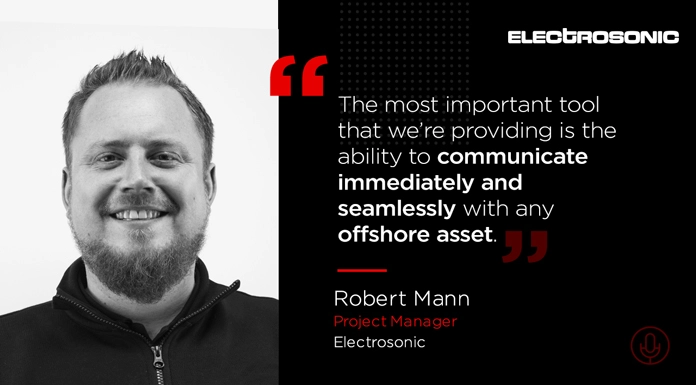
“The most important tool that we’re providing is the ability to communicate immediately and seamlessly with any offshore asset,” Mann adds.
For the latest news, videos, and podcasts in the Pro AV Industry, be sure to subscribe to our industry publication.
Follow us on social media for the latest updates in B2B!
Twitter – @ProAVMKSL
Facebook – facebook.com/marketscale
LinkedIn – linkedin.com/company/marketscale