So how can universities deliver meaningful, equitable, and scalable experiential learning without forcing students to bet everything on a single, high-stakes internship?
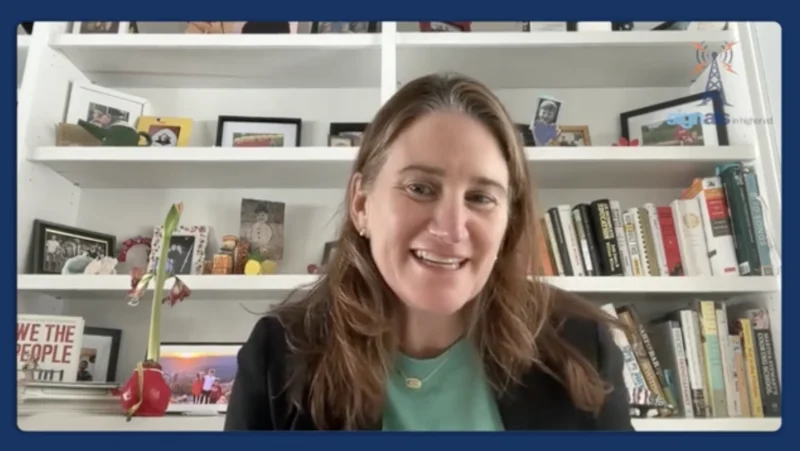
Welcome to Signals in Higher Ed. In the latest episode, host Darin Francis sits down with Dr. Kemi Jona, Vice Provost for Online Education and Digital Innovation at the University of Virginia, to explore the university’s emerging “flood the zone” strategy—an approach designed to give students many low-risk, flexible opportunities to explore careers, build skills, and gain confidence long before a capstone or internship moment.
Together, they unpack how experiential learning can be reimagined across curricular and co-curricular contexts, why early exploration matters as much as advanced application, and how digital platforms and student-led infrastructure can unlock scale at even the largest R1 institutions.
Top insights from the talk…
-
How “flooding the zone” with diverse, low-risk experiential opportunities reduces inequity and improves student decision-making.
-
Why student clubs, career academies, and asynchronous projects may be the hidden infrastructure for scaling experiential learning.
-
How experiential learning doubles as “authentic assessment” in an era of AI, offering outcomes that are both employer-valued and AI-resistant.
Dr. Kemi Jona is a higher education innovation leader with more than 25 years of experience at the intersection of learning sciences, digital education, and workforce strategy. As Vice Provost for Online Education and Digital Innovation at the University of Virginia, and previously a senior leader at Northeastern University, he has driven large-scale digital transformation, built enterprise learning partnerships with organizations like Google, IBM, and GE, and launched new lifelong learning and talent pathways. A former faculty member at Carnegie Mellon and Northwestern, Dr. Jona has led over $40M in funded research and is widely recognized for applying learning science to scalable, equitable, and industry-aligned education models.
Article written by MarketScale.