How Business Schools Can Scale Co-op Without Losing the Student Experience
Experiential learning has shifted from a differentiator to an expectation in higher education, especially as employers place more value on job-ready graduates who can adapt quickly to changing workplace demands. At the same time, AI is reshaping entry-level work, making durable skills like judgment, communication, and adaptability more important than routine task execution. In that environment, colleges are under growing pressure to prove that classroom learning connects meaningfully to career outcomes.
So what does it actually take to build a co-op model that reaches every student, works for employers, and still preserves the educational mission of the institution?
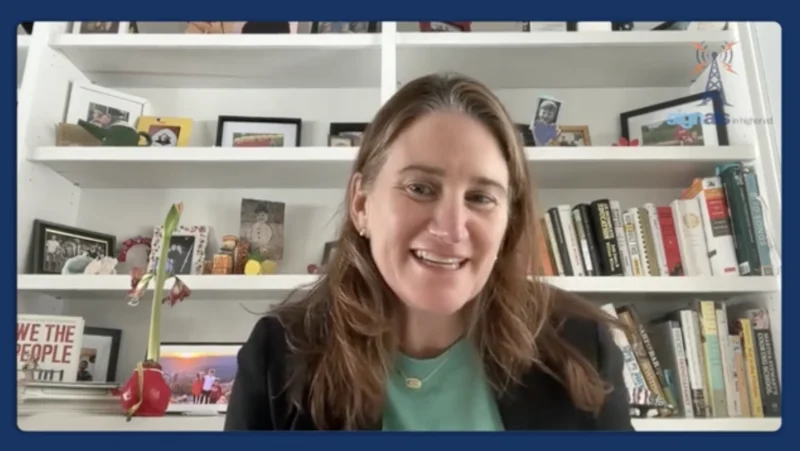
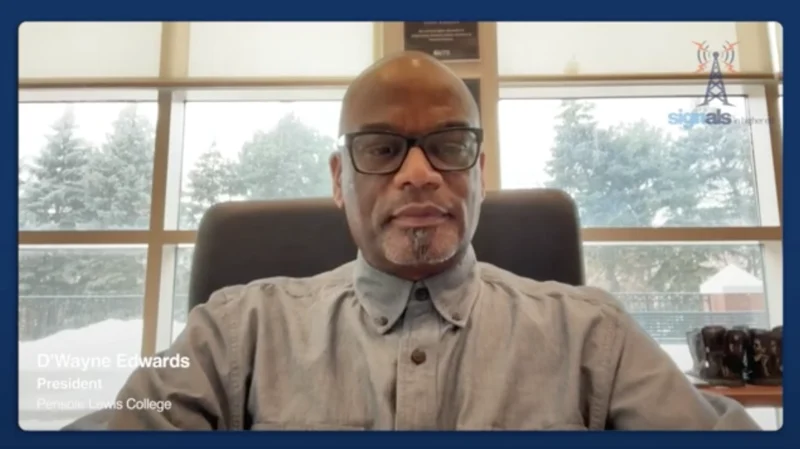
On this episode of Signals in Higher Ed, host Darin Francis sits down with Dr. Jaime Windeler, Associate Dean of Undergraduate Programs and Student Experience at the University of Cincinnati’s Lindner College of Business. Their conversation explores what it takes to launch and scale a universal co-op requirement, how institutions can structure employer partnerships for long-term value, and why experiential learning may be one of the most powerful tools for building student confidence and career readiness.
What you’ll learn…
- Scaling co-op is far more complex than making it a requirement. Windeler explains the policy, infrastructure, tracking, and support systems needed to move from optional participation to an embedded model for all students.
- Strong employer relationships go beyond hiring. The best partnerships span classroom engagement, executive education, projects, scholarships, and strategic feedback that helps shape curriculum and student support.
- The biggest gains often come for students with the least inherited access. Windeler describes how co-op and experiential learning can rapidly build confidence, metacognition, and ambition for students who may not yet know the hidden rules of professional environments.
Dr. Jaime Windeler is the Associate Dean of Undergraduate Programs and Student Experience at the Carl H. Lindner College of Business at the University of Cincinnati. She joined the university in 2011 as an assistant professor of information systems, later earned tenure, and moved into academic leadership after serving as interim department chair. In her current role, she has helped lead the implementation of a universal co-op requirement in the business school, drawing on her background in systems development, faculty leadership, and student-centered innovation to expand experiential learning at scale.
Article written by MarketScale.