Work-Based Learning & Career Coaching with Strada Education: Closing the Gap Between Education and Opportunity
As higher education faces mounting pressure to demonstrate clear career outcomes, institutions are rethinking how learning connects to work and the role of career coaching in that process. Employers continue to report skills gaps, students are questioning the return on investment of a degree, and states are demanding stronger alignment between postsecondary education and workforce needs. Research shows that students who participate in paid internships and other structured work-based learning experiences are more likely to secure employment and earn higher wages—yet access to these opportunities remains uneven.
So how can colleges and universities scale work-based learning and career coaching in ways that are equitable, sustainable, and truly impactful for students?
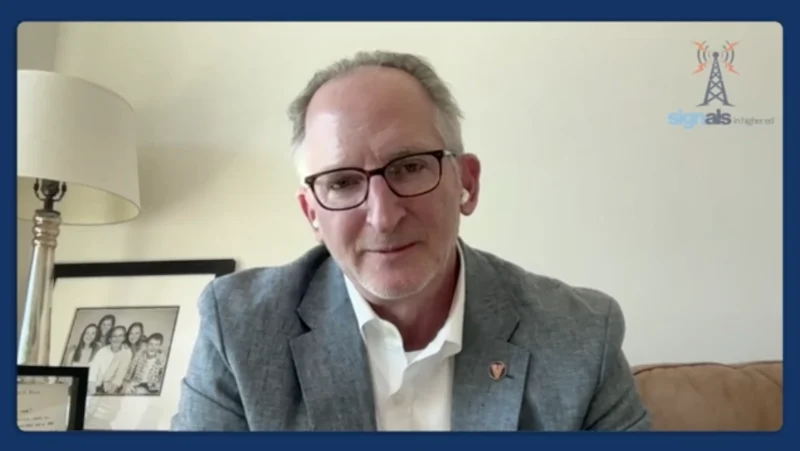
That question is at the heart of this episode of Signals in Higher Ed, hosted by Darin Francis. Francis is joined by Dr. Melissa Leavitt and Kevin Grubb of the Strada Education Foundation in a conversation about how career guidance and work-based learning can work together to transform the student experience. Drawing on research, policy insights, and on-the-ground institutional partnerships, the discussion examines what it takes to move from isolated programs to systemic change.
Top insights from the talk…
- How career coaching and work-based learning reinforce one another to improve student access, decision-making, and outcomes.
- Why paid, high-quality work-based learning experiences are critical for equity and long-term earnings.
- The role of states, systems, and employer partnerships in scaling career-connected education.
Dr. Melissa Leavitt is the Vice President of Postsecondary Education at the Strada Education Foundation and a seasoned social impact leader known for applying systems-level strategy to improve education-to-career outcomes. Her career spans higher education, philanthropy, and research, with deep expertise in program development, labor-market and postsecondary research, grantmaking, and cross-sector collaboration, including leading multi-year strategies and multi-million-dollar initiatives. A prolific researcher and communicator, she has authored major national reports, delivered dozens of executive-level presentations, and built research-driven thought leadership that influences policy, institutional practice, and workforce alignment.
Kevin Grubb is the Vice President of Work-Based Learning at the Strada Education Foundation and a nationally recognized leader in career development, institutional change, and employer partnership strategy. Formerly the inaugural Chief Career Officer at Villanova University, he designed and scaled innovative career pathways and employer engagement models that have shaped national conversations on workforce readiness and student outcomes. A Professional Certified Coach and longtime consultant, Grubb brings deep expertise in executive coaching, organizational change, and equity-centered work-based learning systems that expand access to high-quality career opportunities for all learners.
Article written by MarketScale.