Battery Advancements Bring EVs Closer to Widespread Use

 

Electric vehicles are becoming more and more prevalent, but there’s still work to be done in terms of encouraging widespread adoption.

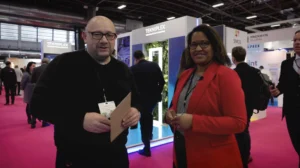
That’s down to a number of factors, said Nicolo Brambilla, Chief Technology Officer at Nanoramic Laboratories. Chief among is cost. While the battery pack is something that drives the cost of the vehicle as a whole, Brambilla said, recent improvements in technology are making electric vehicles better and bringing costs down.

“Today, we have lithium-ion batteries that are basically able to power a vehicle for hundreds of miles, which is very good news, because it’s getting closer to that range you’d need a vehicle to perform (at),” he said. “There are many things that will need to be improved. Cost is definitely one of the things, because, if you look at one of those vehicles price point, it’s still much higher than your conventional engine vehicle.”

Nanoramic has developed Neocarbonix technology, bringing higher energy density at a lower cost thanks to electrodes that don’t use traditional polymer binders and boosting performance of lithium-ion batteries and ultracapacitors.

“You have two major benefits in there. The first one is we’re able to improve the efficiency of the battery while also increasing the energy density, and we increase the energy density by having high-loading electrodes,” he said. “The other advantage, which is also key, especially for the EV market, is the ability to lower the cost of manufacturing.”

Those savings should get passed on to the consumer and, ideally, result in fewer fossil-fueled cars on the roads, creating a cleaner world for everyone.

Follow us on social media for the latest updates in B2B!

Twitter – @MarketScale
Facebook – facebook.com/marketscale
LinkedIn – linkedin.com/company/marketscale

Follow us on social media for the latest updates in B2B!

Image

Latest

AI in sterile processing
AI in Sterile Processing Is Proving Its Value by Acting as a Co-Pilot, Not a Replacement
February 5, 2026

Sterile processing departments are dealing with persistent operational pressures. Surgical case volumes are rising, instruments are more complex, and staffing shortages remain across many health systems. Accuracy and documentation requirements continue to tighten, leaving little room for error. In busy hospitals, sterile processing teams may handle 10,000 to 30,000 surgical instruments per day, with…

Read More
IC-SAT100
Meet IC-SAT100, a Satellite PTT Radio Built for the World’s Most Demanding Environments
February 5, 2026

Let’s have a look at Icom’s IC-SAT100, a satellite Push-To-Talk radio designed for moments when ordinary communication just isn’t an option. Powered by the Iridium satellite network, this rugged handheld delivers instant one-to-many communication at the push of a button—no cell towers or ground infrastructure required. Built to thrive in harsh environments, it’s waterproof,…

Read More
IP110H
From Hospitals to Warehouses, the IP110H Keeps Your Team in Sync
February 5, 2026

Icom’s IP110H is a compact, license-free WLAN radio built to keep teams talking—clearly and instantly—over an existing wireless network. Designed for environments like hospitals, hotels, warehouses, and tunnels, it delivers real-time, full-duplex voice using Icom’s advanced IP radio system. From Bluetooth capability to USB-C charging and a sleek, pocket-friendly design, the IP110H feels modern,…

Read More
IP501H
The IP501H Brings Effortless, Wide-Area Communication to Your Team
February 4, 2026

Meet Icom’s IP501H, a cellular two-way radio built for instant wide-area communication over LTE (4G) and 3G networks. It works just like a traditional radio—supporting individual, group, and all-call conversations—without the need for repeaters or a dedicated IP network. With everything included in the box, the IP501H is designed for quick setup and fast…

Read More