Building a Future-Ready Workforce: With Traditional Training Models Failing, It’s Time for Employers and Educators to Build Solutions Together
In an era where the average job tenure in the U.S. hovers under four years and industries are evolving faster than academic curricula can keep up, the need for a new approach to workforce development has never been more urgent. Companies like Amazon and McDonald’s are responding by investing in “education as a benefit” programs, but the bigger challenge lies in designing learning experiences that are agile, job-relevant, and deeply integrated with workplace needs.
So how do we prepare people for jobs that don’t even exist yet—and how do employers and educators collaborate to build the future-ready workforce we need?
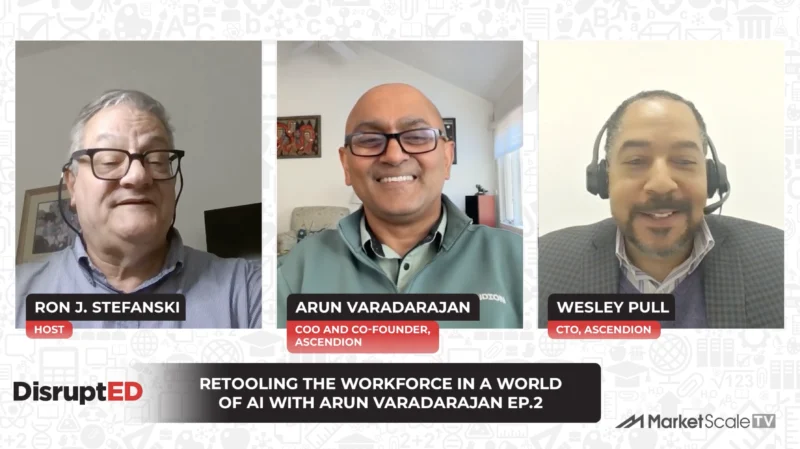
Welcome to DisruptED. In the second episode of this two-part series, host Ron J. Stefanski dives deep into these questions with two powerhouse guests: Michael Horn, a leading author on education and business, and Jason Aubrey, the CEO of Skilltrade. Together, they explore the shifting dynamics between workers, employers, and educators—and why traditional workforce pipelines are falling short.
Highlights from the conversation:
- The evolving definition of a “job”: Workers are no longer just being hired—they’re hiring the job to serve their goals, and job descriptions are increasingly becoming co-created and personalized.
- Education as a recruitment and retention strategy: Companies like Amazon and Starbucks are leveraging education benefits to improve employee tenure and upskill workers for more complex roles.
- The rise of tightly coupled partnerships: Employers and educators must work hand-in-hand to build programs that align with real-time labor market needs, moving away from the outdated, arms-length models of the past.
Michael Horn is a renowned education strategist and thought leader known for pioneering work in disruptive innovation and workforce development. He is the co-founder of the Clayton Christensen Institute and author of several influential books, including the bestseller Job Moves: 9 Steps for Making Progress in Your Career, and serves as an advisor and board member for numerous education and training organizations. With degrees from Yale and Harvard Business School, Horn also teaches at the Harvard Graduate School of Education and co-hosts top education podcasts, making him a central voice in rethinking the future of learning and career pathways.
Jason Aubrey is a seasoned EdTech and workforce development executive with a proven track record of scaling mission-driven organizations and leading successful exits, including MedCerts’ acquisition by Stride, Inc. He is currently the Founder and CEO of Skilltrade, and has previously served as CEO of ClearGage and co-founded LectureTools, an active learning platform used by hundreds of universities globally. Aubrey brings deep experience in organizational transformation, education technology, and public-private workforce partnerships, and holds a bachelor’s degree from the University of Michigan.
Article written by MarketScale.