Hyundai Motors Acquires Boston Dynamics: How Can Robotics Scale Car Manufacturing?


Automotive industry giant Hyundai Motors made waves recently, acquiring noted robotics lab Boston Dynamics for more than $1 billion. That’s a hefty investment – but what does it really represent?

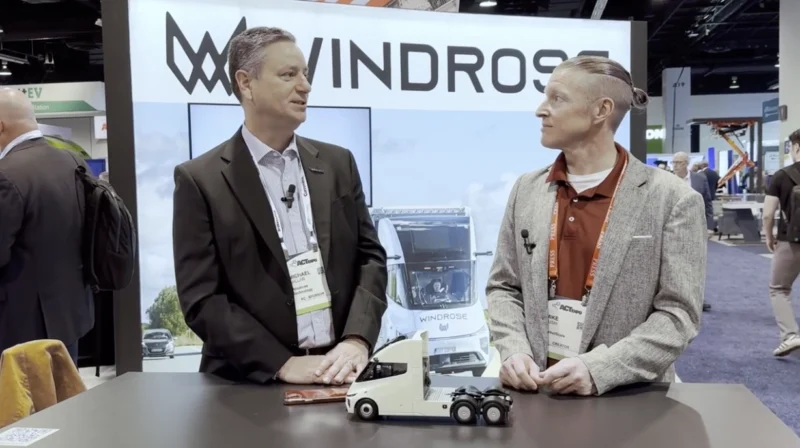
To find out, Voice of B2B Daniel Litwin sat down with Konstantin Maslennikov, CEO and Founder of HereYouGo, which is working to empower anyone to rent part of a fleet of autonomous vehicles as we collectively move toward a self-driving future.

Even though Hyundai’s aggressive move represents a big step toward increased automation, Maslennikov said the process might be more glacier than avalanche.

“You cannot change everything in one day,” he said. “I think it’s more for research and development purposes, mostly. … Maybe for new vehicles.”

The duo explored where Hyundai might get the most out of its investment in Boston Dynamics, how robotic solutions are getting smarter and preparing to scale up, the role of automation in self-driving vehicle manufacturing at scale, and more.

While many companies are working toward that future, it’s still easier to use humans than artificial intelligence in some applications.

“It’s going to be some kind of symbiosis,” Maslennikov said. “Because, if people work with computers, the efficiency just grows very fast. … But we are not there yet, especially with AI enablement. Like, robots making robots? Robots making self-driving cars? We are not there yet.”

Follow us on social media for the latest updates in B2B!

Twitter – @MarketScale
Facebook – facebook.com/marketscale
LinkedIn – linkedin.com/company/marketscale

Follow us on social media for the latest updates in B2B!

Image

Latest

Radar
Physical Retail’s Next Infrastructure Layer: Item-Level Intelligence with Radar
June 4, 2026

Physical retail is under pressure to become as measurable and responsive as e-commerce. While retailers have spent years optimizing digital channels with real-time data, store teams have often had to make decisions with incomplete inventory visibility and delayed operational signals. That gap matters because stores still account for 80% of U.S. retail sales, making…

Read More
Healthcare in Pakistan
From Institutional Excellence to Population-Level Access: How Pakistan Can Bridge Its Healthcare Divide
June 1, 2026

Healthcare systems are under pressure almost everywhere, but the strain is especially visible in lower-resource settings where demand is rising faster than infrastructure. In Pakistan, that pressure is playing out across a system that has to serve more than 250 million people with limited public investment. Public health spending remains below 1% of GDP,…

Read More
Engineering
Scaling Experiential Learning in the Curriculum: How Iron Range Engineering Transformed Engineering Education
June 1, 2026

Engineering has transformed nearly every part of modern life, from the phones in our pockets to the systems powering global industry. But the way engineers are educated has often moved far more slowly than the profession itself. Employers are asking for graduates who can navigate ambiguity, communicate across teams, and contribute meaningfully from the…

Read More
vascular surgeon
When Geography Meets Purpose: How One Move Reshaped a Vascular Surgeon’s Career
May 28, 2026

Medicine isn’t what it used to be—not for the people practicing it. Independent physicians are becoming the exception, not the norm, as more doctors move into hospital systems, corporate groups, and academic networks. At the same time, the pipeline of specialists isn’t keeping pace with growing patient needs, particularly in complex fields like vascular…

Read More