Leading Global Product Teams: How Designing Across Time Zones Made Our Systems Smarter

Back in college, I never thought time, tools, tech, and hours would be essential to design. But working with a team that spans the world changed everything. It forced me to rethink how we plan, how we collaborate, and how we build. This story is not about a single product or a perfect process. It is about designing the kind of structure that holds when nobody is in the same room, or even on the same day.
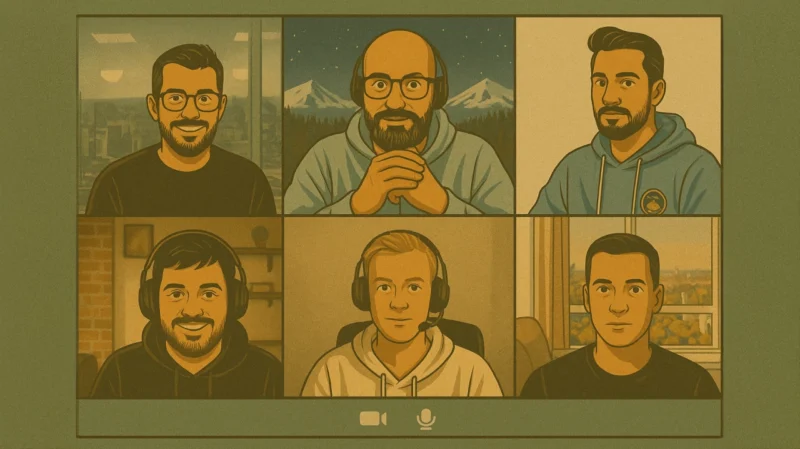
My team has members from in the United States, Canada, Venezuela, Pakistan, Lebanon, Ukraine, India, Slovenia, Mexico, and across South Asia. We do not share time zones or holidays. We do not share cultural shorthand. But we show up with one goal: to build systems that work, scale, and make sense across contexts.
We are not just building software. We are designing frameworks for teams that move while you sleep. That takes more than code. It takes creative thinking, trust, and a process that can stretch without breaking.
How I Lead When Nobody Is Online at the Same Time
The way I lead is simple. I make sure the team always knows what comes next. That means writing with clarity, thinking ahead, and removing guesswork. I set the direction early and let others run with it.
Our system depends on structure. We use documentation, clear tickets, and strong briefs to keep everyone aligned. The goal is not to be perfect. It is to be clear enough that the work can move without needing a meeting.
This model works because we are not building from control. We are building from clarity.
Designing Through Misunderstanding
One time I said “the copy is wrong” and a developer thought I meant a copy function. That moment taught me more than any style guide. Language is not neutral. It is not shared. You have to design for interpretation, not just intent.
That lesson shows up in our products. We double-check how labels read. We think about icon meanings. We slow down and ask if something makes sense outside our bubble. That discipline has made everything we build more durable.
Two Styles, One System
Some parts of our team prefer minimal layouts. Others want energy and movement. We do not pick one. We build systems that can carry both.
The same product can feel different depending on the audience. We design for that flexibility from the start. Our job is not to settle debates between styles. Our job is to build frameworks that adapt.
We Built It Ourselves
The way we work today did not come from a playbook. We built it through trial, feedback, and doing the hard work of learning how people actually work across time, culture, and expectation.
Our structure supports internal platforms, client tools, and collaborative delivery. The system lets us scale fast and onboard new talent easily. That did not happen by accident. It happened by asking hard questions and writing better answers.
Designing With a Global Brain
When you stop designing for the people in your room and start designing for the people who are nothing like you, something shifts. You start asking better questions. You build things that stretch farther. You notice what you never saw before.
This is not remote work. This is global design. And it requires more than working from home. It requires working with perspective.
Closing Thought
This team has made me a better communicator, a better listener, and a better designer. I do not think in features anymore. I think in systems. I think in handoffs. I think in flexibility.
That is what makes our work different. And that is what makes it last.