What’s Next for Higher Education Enrollment?

Covid-19 has disrupted scores of institutions across the United States and worldwide, higher education included. As the 2021 spring semester draws to a close, research reveals that enrollment rates are declining, and, in some instances, those dips are significant.
According to a National Student Clearinghouse Research Center study, undergraduate enrollment dropped 4.5%, while two-year colleges dropped 9.5% in enrollment. What’s also become evident is that the value proposition for higher education has expanded beyond the traditional18-24 student demographic.
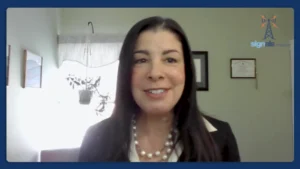
Host Daniel Litwin, the Voice of B2B, was joined by Dr. Michael Horowitz, President and Founder of TCS Education System, to talk about the decline in higher education enrollment, and how institutions can craft strategies to meet the needs of shifting demographics, including non-traditional students and the Latina and Latino population. TCS is a nonprofit consortium of graduate and undergraduate schools, from law to psychology, focused on a collaborative approach to professional development and education. It partners with institutions that are receptive to the local community and its students.
“At our colleges, the typical student is a 35-year-old working woman who’s coming back to complete her bachelor’s degree.”
Non-traditional students, Horowitz explained, are now the majority of students in the United States—and higher education needs to change accordingly.
“At our colleges, the typical student is a 35-year-old working woman who’s coming back to complete her bachelor’s degree. There are millions of Americans who started college or didn’t complete higher education,” he said.
To better address students’ needs, colleges need to be flexible and adaptive, learning the needs of their specific community and strengthening their online education tools.
“The future for all students is finding the right mix, what we call hybrid education: What are the best courses taught online, what classes are best taught face-to-face?” Ultimately, he added, students should exit at all levels of higher education with the ability to get a job and pay back student loans.
Follow us on social media for the latest updates in B2B!
Twitter – @MarketScale
Facebook – facebook.com/marketscale
LinkedIn – linkedin.com/company/marketscale