Understanding COVID-19 Funding For Schools: School Safety Today

With so many different federal actions providing COVID-19 funding for schools to reopen this Fall, educators, administrators, and facility managers are struggling to understand the best way to take advantage of all of this assistance and how to center their strategies in thoughtful ways.

Here to give insights on this episode of School Safety Today, a Raptor Technologies podcast is Dr. Paula Love, President, RFPMatch.com, The Funding Doctor. She talked with host Daniel Litwin, the Voice of B2B, about how to align funds to protect your school, details on grant application and submission, and how to create sustainability in your investments and maximize the use of funds.

“What I see right now is a funding frenzy because you’re trying to navigate all these funds and different fund names,” Love said. “Sometimes it’s difficult to ascertain which grants are associated with different acts.”

The CARES Act (Coronavirus Aid Relief and Economic Security) provided funds to the Department of Education called Education Stabilization Funds, which is the umbrella that oversees all funds. There are two pathways that K-12 schools can access: they are ESSER (Elementary and Secondary School Education Relief) and GEER(Governor’s Education Emergency Relief) funds.

The ARP ESSER fund has set aside $123 billion in available funds to help K-12 schools safely reopen their doors, providing dollars for health screening tools, funds for learning loss, and additional resources to address the mental well-being of students impacted by the isolation of lockdown. GEER set aside $3 billion, which will use a governor’s discretion for how they will use that money in their state.

Listen to hear Dr. Love further break down the COVID-19 funding for schools.

Follow us on social media for the latest updates in B2B!

Twitter – @MarketScale
Facebook – facebook.com/marketscale
LinkedIn – linkedin.com/company/marketscale

Follow us on social media for the latest updates in B2B!

Image

Latest

Joint Commission 360
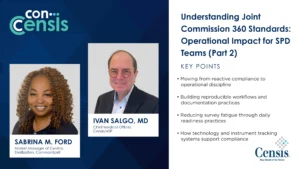
Understanding Joint Commission 360 Standards: What They Mean for SPD Teams (Part 2)
March 23, 2026

Healthcare teams today are feeling the pressure to move beyond last-minute compliance and instead build processes that work consistently every day. That shift is especially clear in sterile processing departments (SPDs), where the Joint Commission 360 model is redefining what “survey readiness” really means. With patient safety directly tied to instrument quality—and studies consistently…

Read More
teacher
Building the Next Generation of Educators Through Apprenticeship Pathways and Workforce-Aligned Training
March 23, 2026

Teacher shortages aren’t exactly a new headline—but lately, they’ve started to feel a lot more urgent. In some places, schools have gone years without enough fully trained teachers in the classroom, exposing real flaws in how we prepare and retain educators. Add in the rising cost of becoming a teacher and training models that haven’t…

Read More
Joint Commission 360
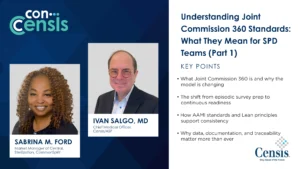
Understanding Joint Commission 360 Standards: What They Mean for SPD Teams (Part 1)
March 17, 2026

For a long time, compliance in healthcare was tied to the survey cycle. Now, that model is shifting. With the introduction of Joint Commission 360, organizations are being asked to demonstrate continuous performance—not just preparedness. As patient safety comes under increasing scrutiny, The Joint Commission is moving toward an approach built on real-time data, traceability,…

Read More
university
The Employer University Alignment Journey with Kristen Fox, CEO of Business-Higher Education Forum
March 16, 2026

Across the U.S., the conversation about the value of a college degree is increasingly tied to one central question: Does higher education actually prepare students for the workforce? As artificial intelligence reshapes how work gets done and employers rethink the skills they need, universities are under growing pressure to ensure graduates leave not just…

Read More