Volta Knowledge: Origins of Volta

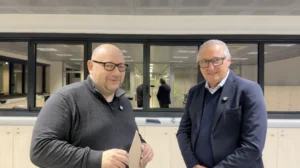
Every great company has an origin story. Denis Kouroussis, Founder & CEO of Volta Insite, joined Tyler Kern to talk about the factors that led to the creation of Volta energy. But first, Kern wanted to learn a bit of Kouroussis’ personal origin story.

Kouroussis describes himself as a tech geek from birth. He also possesses a lifelong love of cars, which fueled an interest in engineering. “When I was thirteen, I opened up a fuel injection box,” Kouroussis said.

“This was from an old Cadillac that my father used to have. It was the first throttle-body fuel injected system in the industry, and the car at the time was old, so he allowed me to play with it. I opened the ECU, and there were many chips, and I was like, this is fascinating. You’ve got electronics controlling an engine—I want to learn more.” And this led Kouroussis down the path of electrical engineering.

Volta started in 2009. Kouroussis saw the shifts in automotive manufacturing leaning towards electric vehicles as the potential for increased pressures on the grid. “We founded Volta specifically to address that problem through power management, or demand management,” Kouroussis said.

Although Kouroussis saw the forthcoming issues back in 2009, the investment world was slower to catch up. So, while Volta waited out the future, it began to tackle real-world manufacturing issues through consulting work fixing motor issues and other related production challenges. “Through the consulting, we came across this concept of electrical signal analysis, and that’s where Volta Insite was born.”

Volta takes its name from Alessandro Volta, the Italian physicist, and pioneer of electricity and power. “Telsa Motors had come out, so I thought Volta would be an interesting sort of parallel company,” Kouroussis said. “Alessandro Volta was the first electrical engineer, in a sense, because he put the first battery pack together.”

Follow us on social media for the latest updates in B2B!

Image

Latest

Leadership
Leading Change from Within: The Power of Transformational Leadership
February 7, 2026

Leadership is being tested in real time. As organizations navigate AI adoption, remote work, and constant structural change, many leaders are discovering that strategy alone isn’t enough. People are asking deeper questions about purpose, trust, and what it really means to show up for teams when uncertainty is the norm. In a world where burnout…

Read More
technology
Clarity Under Pressure: Technology, Trust, and the Future of Public Safety
February 7, 2026

When something goes wrong in a community—a major storm, a large-scale accident, a violent incident—there’s often a narrow window where clarity matters most. Leaders must make fast decisions, responders need to trust the information in front of them, and the systems supporting those choices have to work as intended. Public safety agencies now rely…

Read More
weather Intelligence
Clarity in the Storm: Weather Intelligence, GIS, and the Future of Operational Awareness
February 6, 2026

For many organizations today, weather has shifted from an occasional disruption to a constant planning factor. Scientific assessments show that extreme weather events—including heatwaves, heavy rainfall, and wildfires—are occurring more frequently and with greater intensity, placing growing strain on infrastructure, utilities, and public services. As weather-related disruptions become more costly and harder to manage,…

Read More
AI in sterile processing
AI in Sterile Processing Is Proving Its Value by Acting as a Co-Pilot, Not a Replacement
February 5, 2026

Sterile processing departments are dealing with persistent operational pressures. Surgical case volumes are rising, instruments are more complex, and staffing shortages remain across many health systems. Accuracy and documentation requirements continue to tighten, leaving little room for error. In busy hospitals, sterile processing teams may handle 10,000 to 30,000 surgical instruments per day, with…

Read More