The Changing Regulations Impacting Manufacturers Series

Derek DeGeest, President of DeGeest Corporation and LestaUSA, successfully brought self-learning robotics to their finishing operation, but it was no small feat. Navigating U.S. manufacturing hazardous location regulations’ dicey waters with this new technology wasn’t easy, but DeGeest accomplished it and is now creating certified solutions for other manufacturers.

For this second part of a series on the impact of changing regulations on manufacturers, Manufacturing a Stronger Standard focuses on robotics in a Class I, Division 1 environment and how DeGeest was able to help our country move forward with accessible robotic systems for other general industry manufacturers.

“It was a totally unexpected journey,” DeGeest said. “We went from bringing a new robotic technology to our manufacturing facility to understanding how to successfully help our company and others put a self-learning robot into a Class 1 Div 1 environment in North America and how different it is from the rest of the world.”

The curveball came when DeGeest said their  company was ready to go live with their new paint system and  ATEX certified robots. The electrical inspector said, “Not so fast.”

“We had to dig in and learn and find out how to adapt to North American requirements and the changing regulations that were happening,” DeGeest said.

With perseverance to get it right and work with regulators to update the codes, DeGeest now has one of the largest contract job shop, self-learning robotic painting systems in North America.

Today, DeGeest builds, designs and installs Class 1, Division I robotic finishing systems for their customers. “We build them how we would use them because we are in their same shoes.” said DeGeest.

Follow us on social media for the latest updates in B2B!

Twitter – @MarketScale
Facebook – facebook.com/marketscale
LinkedIn – linkedin.com/company/marketscale

Follow us on social media for the latest updates in B2B!

Image

Latest

skilled trades mentorship
Why Leadership Without Humanity Is Failing Today’s Workplace
March 24, 2026

As the world faces historic labor shortages, an increase in burnout, and record-high turnover, organizations are confronting a leadership reckoning. In May 2024, Gallup found that more than 50 percent of U.S. employees were actively searching for new jobs or watching for openings. Taken together, these trends signal a clear and growing breakdown in…

Read More
Joint Commission 360
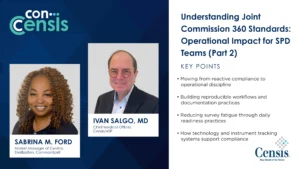
Understanding Joint Commission 360 Standards: What They Mean for SPD Teams (Part 2)
March 23, 2026

Healthcare teams today are feeling the pressure to move beyond last-minute compliance and instead build processes that work consistently every day. That shift is especially clear in sterile processing departments (SPDs), where the Joint Commission 360 model is redefining what “survey readiness” really means. With patient safety directly tied to instrument quality—and studies consistently…

Read More
teacher
Building the Next Generation of Educators Through Apprenticeship Pathways and Workforce-Aligned Training
March 23, 2026

Teacher shortages aren’t exactly a new headline—but lately, they’ve started to feel a lot more urgent. In some places, schools have gone years without enough fully trained teachers in the classroom, exposing real flaws in how we prepare and retain educators. Add in the rising cost of becoming a teacher and training models that haven’t…

Read More
Joint Commission 360
Understanding Joint Commission 360 Standards: What They Mean for SPD Teams (Part 1)
March 17, 2026

For a long time, compliance in healthcare was tied to the survey cycle. Now, that model is shifting. With the introduction of Joint Commission 360, organizations are being asked to demonstrate continuous performance—not just preparedness. As patient safety comes under increasing scrutiny, The Joint Commission is moving toward an approach built on real-time data, traceability,…

Read More