Siemens Gets Serious with a Significant Investment in 3D Technology


Additive manufacturing, or 3D technology, is in the midst of creating a monumental shift in the industry. A pivotal move recently announced by Siemens, disclosed plans to enhance their manufacturing capacity significantly. According to a MarketWatch report, Siemens is investing a staggering 2.17 billion euros in their manufacturing operations. This enormous investment signifies an escalating commitment to the technology’s potential to revolutionize production.

So, what exactly is the future of additive manufacturing? Is the hefty investment by Siemens indicative of a trend that will revolutionize the production of goods, or is it just another tool to supplement traditional manufacturing? Moreover, how does this influence the balance of power in the manufacturing sector? These are critical questions that many industry stakeholders, investors, and innovators are asking right now.

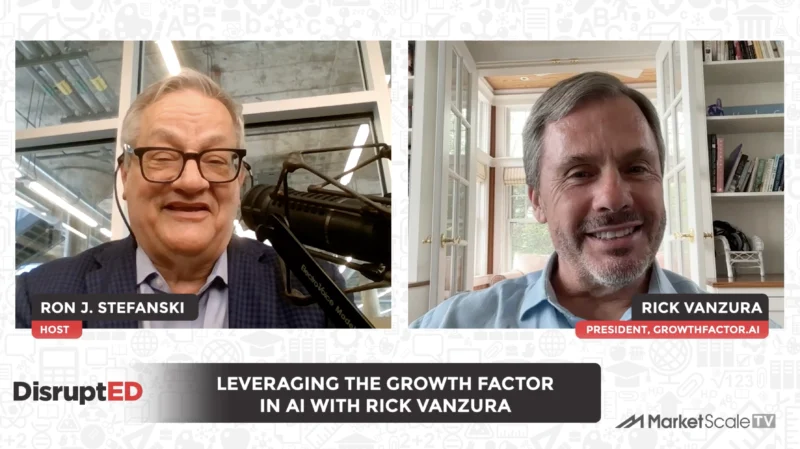
On the first of two DisruptED Advanced Manufacturing Edition podcast episodes on this topic, host Ron J Stefanski sits down with Steve Vosmik, Head of Additive Manufacturing at Siemens, to explore this transformative trend.

Stefanski and Vosmik’s first conversation includes the following:

  • Insights into how Siemens is using 3D technology to revolutionize production and what their recent multi-billion-dollar investment means for the industry
  • A ringside view of Steve’s unique journey from liberal art major considering law school to running a major additive manufacturing operation
  • Discussion on the challenges and opportunities of integrating 3D manufacturing processes into legacy systems

Steve Vosmik is a man of exceptional determination and creativity. His non-traditional path to additive manufacturing offers a unique perspective on the industry. Despite not having an engineering background, Steve has spearheaded Siemens’ efforts in additive manufacturing. His wealth of experience and keen insights into this disruptive technology make him a voice to heed in advanced manufacturing.


Follow us on social media for the latest updates in B2B!

Image

Latest

Leadership
Leading Change from Within: The Power of Transformational Leadership
February 7, 2026

Leadership is being tested in real time. As organizations navigate AI adoption, remote work, and constant structural change, many leaders are discovering that strategy alone isn’t enough. People are asking deeper questions about purpose, trust, and what it really means to show up for teams when uncertainty is the norm. In a world where burnout…

Read More
technology
Clarity Under Pressure: Technology, Trust, and the Future of Public Safety
February 7, 2026

When something goes wrong in a community—a major storm, a large-scale accident, a violent incident—there’s often a narrow window where clarity matters most. Leaders must make fast decisions, responders need to trust the information in front of them, and the systems supporting those choices have to work as intended. Public safety agencies now rely…

Read More
weather Intelligence
Clarity in the Storm: Weather Intelligence, GIS, and the Future of Operational Awareness
February 6, 2026

For many organizations today, weather has shifted from an occasional disruption to a constant planning factor. Scientific assessments show that extreme weather events—including heatwaves, heavy rainfall, and wildfires—are occurring more frequently and with greater intensity, placing growing strain on infrastructure, utilities, and public services. As weather-related disruptions become more costly and harder to manage,…

Read More
AI in sterile processing
AI in Sterile Processing Is Proving Its Value by Acting as a Co-Pilot, Not a Replacement
February 5, 2026

Sterile processing departments are dealing with persistent operational pressures. Surgical case volumes are rising, instruments are more complex, and staffing shortages remain across many health systems. Accuracy and documentation requirements continue to tighten, leaving little room for error. In busy hospitals, sterile processing teams may handle 10,000 to 30,000 surgical instruments per day, with…

Read More