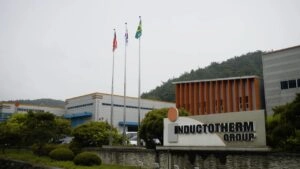
Inductotherm Group Brazil: Transforming the Metallurgical Industry with Innovative Induction Technology

In the heart of Brazil’s burgeoning metallurgical industry lies a company that has been silently revolutionizing the field for the past half a century. Since 1972, Inductotherm Group Brazil has been developing state-of-the-art induction equipment, bringing a unique mix of scientific precision and engineering excellence into the heart of Brazil’s industrial sector. This innovative approach has proven instrumental in tackling one of the industry’s most persistent challenges – efficient and precise heat treatment of metals.
Fernando Mauri, Commercial Manager, Sandro Riberio, Commerical Director, Heating and Welding, Francisco Parra, Engineering Director Heating Forging Melting and Welding, Ademir Figueiredo, Service Manager and Ademir Joaquim de Oliveira, Production Manager shares a bit more about Inductotherm Group Brazil.
The Problem: Traditional Heat Treatment Methods Traditional heat treatment processes have long been a challenge for the metallurgical industry and metal processing. The conventional furnace methods, while effective, often suffer from inefficiencies and lack precision. In addition, these traditional processes often consume excessive amounts of energy and produce a high level of emissions, creating environmental concerns.
These problems are amplified in Brazil, a country that boasts a massive metallurgical industry, necessitating an innovative solution to enhance productivity and reduce environmental impact.
The Solution: Electromagnetic Induction Enter Inductotherm Group Brazil with their innovative induction heating systems. For the uninitiated, induction heating might seem like something out of a sci-fi movie. A piece of metal, when placed in a coil, quickly heats up to a cherry-red color, an almost magical display of physics and power electronics in action.
The process, however, is more science than sorcery. Induction heating leverages the principles of electromagnetic induction. In this process, an electrically conducting object, usually a metal, is heated through high-frequency magnetic fields, which create circulating currents within the object, leading to rapid heating.
The beauty of induction heating lies in its efficiency and precision. Unlike traditional methods that uniformly heat the entire piece of metal, often wasting energy, induction heating can target specific sections of the material with pinpoint accuracy. The result is a faster, more precise, and energy-efficient heating process.
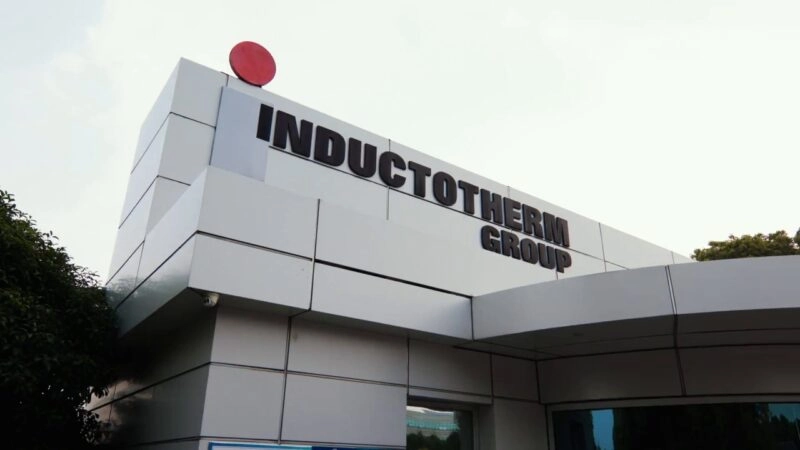
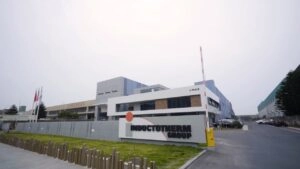
Inductotherm: The Pioneer of Induction Heating in Brazil Being at the forefront of this technology, Inductotherm Group Brazil has established the largest and best-equipped induction equipment factory in Brazil. Their commitment to quality and innovation is evident in their flexible and high-performance induction systems, which are customized to meet the diverse needs of their customers.
Furthermore, Inductotherm’s commitment extends beyond manufacturing. The company provides heat treatment services and technical assistance, along with sales of components and reforms. This comprehensive service ensures that their clients can maximize the benefits of induction technology.
The Positive Outcome: A Brighter Future for the Metallurgical Industry The adoption of induction technology, led by Inductotherm, promises a brighter future for Brazil’s metallurgical industry. By increasing efficiency, reducing energy consumption, and enhancing precision, induction technology is poised to drive a significant shift in the industry’s approach to metal heating and treatment.
In a world increasingly concerned about sustainability, this revolutionary technology also brings an environmental advantage. By using less energy and reducing emissions, induction heating is a significant step towards greener and more sustainable industrial practices.
The Inductotherm Group Brazil, with its pioneering work in induction technology, continues to shape the future of Brazil’s metallurgical industry. Their dedication to innovation and customer service has not only positioned them as a leader in the field but also as a catalyst for positive change in the industry.