Tank Talk: EMS Joins the Titan Cloud Family


A couple of months ago Titan Cloud sent the convenience store industry abuzz when they announced their acquisition of Environmental Monitoring Solutions, or EMS. For the last 25 years, EMS has supported fuel systems from retail petrol stations across Australia and EMEA markets. EMS has been a key industry player, offering leak detection, wetstock management, and risk management technology and project consultation among other services.

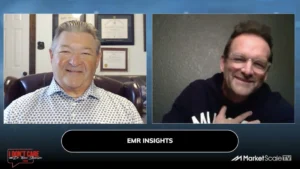
On this episode of Tank Talk, Titan’s Chief Revenue Officer John Donnelly III turns the spotlight on Russell Dupuy, Managing Director of EMS, to discuss the decision to acquire EMS and what’s next for the company’s integration.

The two agree: the EMS acquisition will allow Titan Cloud to serve all their global customers more effectively and efficiently.

“We have clients around the world who would like to be able to manage their data in-house,” Dupuy said. “We can offer our Greenscan Fuelsuite platform to be on-prem. We can provide full training to the client and provide ongoing support.”

For Titan Cloud customers anxious to use EMS’ capabilities, the news is undoubtedly exciting.
“In the U.S., leak detection in fuel systems is well evolved,” Dupuy said. “However, outside the U.S., there are minimal EPA regulations. What we’ve had to do is evolve our Greenscan soil leak detection well beyond what we believe the U.S. market has been offering to be more flexible regarding other markets that have less sophistication, the absence of EPS requirements, the absence of quality management; in terms of doing it right.”

As the two companies combine synergies in the coming months, one thing is for sure: 2021 is sure to be a year of growth for Titan Cloud.

Follow us on social media for the latest updates in B2B!

Twitter – @MarketScale
Facebook – facebook.com/marketscale
LinkedIn – linkedin.com/company/marketscale

Follow us on social media for the latest updates in B2B!

Image

Latest

data center
The Next Data Center Bottleneck Isn’t Power or Cooling, It’s People
February 8, 2026

With the rapid rise of AI workloads, data centers are being built with higher power density, stricter reliability expectations, and cooling technologies that are evolving faster than most teams can adapt. As a result, these facilities aren’t just getting bigger—they’re becoming harder to operate, harder to staff, and far less forgiving when something goes…

Read More
Precision With Purpose: The Geospatial Advantage in Telecom Network Planning
February 7, 2026

Telecom networks are no longer planned or evaluated in isolation. As 5G, private LTE, fixed wireless, and mission-critical communications expand, operators are expected to deliver stronger coverage, higher reliability, and demonstrable performance—often while managing complex technologies and constrained resources. Regulators, customers, and public agencies are increasingly focused on outcomes that can be measured and validated,…

Read More
future of public safety
Clarity Under Pressure: Technology, Trust, and the Future of Public Safety
February 7, 2026

When something goes wrong in a community—a major storm, a large-scale accident, a violent incident—there’s often a narrow window where clarity matters most. Leaders must make fast decisions, responders need to trust the information in front of them, and the systems supporting those choices have to work as intended. Public safety agencies now rely…

Read More
weather Intelligence
Clarity in the Storm: Weather Intelligence, GIS, and the Future of Operational Awareness
February 6, 2026

For many organizations today, the weather has shifted from an occasional disruption to a constant planning factor. Scientific assessments show that extreme weather events—including heatwaves, heavy rainfall, and wildfires—are occurring more frequently and with greater intensity, placing growing strain on infrastructure, utilities, and public services. As weather-related disruptions become more costly and harder to…

Read More