
Season 2

In the most recent episode of “There’s More to IT,” host Jason Claybrook discussed the widespread exposure of Per and Polyfluoroalkyl Substances, better known as PFAS, in various aspects of everyday life. His guest was Yuran Li, the director of MS Commercial Strategies at Alternative Biomedical Solutions — a Texas based laboratory. The two talked…
Latest
Season 2
Mastering the Science Behind Creating an IT Department
In this episode of There’s More to IT, host, Jason Claybrook, sat down with David McLaughlin, President & CEO, Columbia Advisory Group. The two discuss McLaughlin’s journey in the field, the importance of the advisory component in CAG’s work, and CAG’s role in higher education. McLaughlin co-founded Columbia Advisory Group a little over 10…
Food & Beverage
Is Holistic Nutrition the Answer for Improving Overall Nutritional Needs?
In the latest episode of the podcast “There’s More to IT,” host Jason Claybrook brings on his wife Niki, and diverges from technology to discuss maintaining healthy-eating habits, as more and more people return to work traveling as pandemic restrictions ease. As a holistic nutrition consultant based in Texas, Claybrook consults clients that have…
Season 2
Technology Leaders Are No Longer Behind the Scenes, They Are Integral for Driving Strategy
Toby Buckalew, Interim CIO, Columbia Advisory Group, is a leading technology strategist with over thirty years of industry experience. Jason Claybrook sat down with Buckalew for an in-depth discussion on his career and insights into the current state of IT management. Buckalew witnessed plenty of technology evolution and innovation during his lengthy career in…
Sciences
The Industry That is Depending on Science and Regulation to Grow
Yuran Li, Director, MS Commercial Strategies, Alternative Biomedical Solutions (ABS), is a biochemist by training. Still, his fascinations with physics, math, and probability have led him down some interesting paths, including some stints in the professional poker world. Lucky for ABS, he chose the science route. Cannabis is a schedule 1 drug classification by the…
Latest
Stronger Training Pipelines and Smarter Social Media Can Help Solve HVAC’s Talent Shortage
The skilled trades are at a crossroads. By some industry estimates, for every five experienced technicians retiring, only two new ones are entering the field—highlighting a growing HVAC talent gap. At the same time, buildings are becoming more complex, more connected, and more dependent on high-performance mechanical systems. The stakes are real: without a…

Where Design Meets Durability: Why Commercial Surfaces Must Support Safety, Cleanability, and Long-Term Value
When a commercial space fails, it often fails quietly: a lobby floor that becomes slippery when wet, a hotel bathroom that is difficult to clean, a healthcare surface that cannot withstand constant disinfection, or an office finish that looks great until afternoon glare makes the room uncomfortable. These are not purely aesthetic problems; they are…

Crafted Journey How To: Building a Creative Career Across Scripts, Stages, and Sound
Creative careers rarely move in a straight line, especially for writers working across stage, screen, audio, books, and independent film. Sustaining that kind of life often means finding opportunities wherever they appear, building a strong network, staying open to different formats, and saying yes to collaborations that can lead somewhere unexpected. The stakes are…
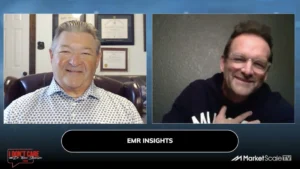
EMR Strategy, Consulting, and Career Pivots with MedSys Co-Founder Mark Embry
Electronic medical records (EMRs) have moved from a back-office upgrade to a frontline determinant of care quality, clinician burnout, and hospital economics. With U.S. hospitals often spending tens to hundreds of millions—sometimes exceeding $100 million—on EMR implementations, the stakes have never been higher for getting both the technology and the human adoption right. As…