Marketing Trends for the Self-Storage Industry


There are many ways to market a business, but making an impression that sticks with a potential customer isn’t always easy. The self-storage industry relies on exact timing to get their offerings in front of customers’ eyes when they need the service.

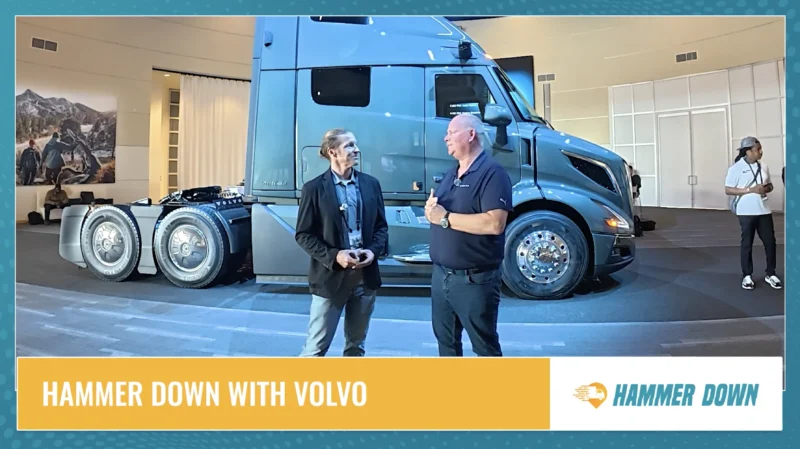
This is where trucks come in. CJ Stratte, Marketing Director with On The Move, is a huge proponent of utilizing trucks as a frictionless way to market and advertise self-storage services. She joined CEO and Co-owner of Pinnacle Storage Properties, John Manes, to talk about the latest marketing trends in the self-storage industry and why maximizing the use of trucks to advertise is a smart way to go. When Manes started his self-storage career, marketing wasn’t as sophisticated as today, and grassroots marketing was rarely thought of.

Manes said Pinnacle Storage stands out at tradeshows and in public by outfitting their leaders with outrageous themed sports jackets.

“It’s the best $250 piece of marketing I’ve ever spent,” Manes said. “I always say, ‘how do you stand out in a crowd at a conference,’ and obviously we do.”

With the pandemic reducing the opportunities for in-person interactions, like conferences and trade shows, Stratte said it’s tougher than ever to reach an audience. “We’re still an essential business, so not much has changed in that area, but the way that we touch our customers has definitely changed.”

But with all of the marketing strategies available to self-storage, the truck remains a key component. Hundreds and thousands can see the business’s message of people as it goes to and from a self-storage facility.

One change Manes mentioned is some businesses are gravitating towards a van model instead of the standard box-truck model.

“We’ve even had customers that have gotten an F-150 from us,” Stratte said. “Even to just to have something with their message on it going around the community.”

Follow us on social media for the latest updates in B2B!

Twitter – @MarketScale
Facebook – facebook.com/marketscale
LinkedIn – linkedin.com/company/marketscale

Follow us on social media for the latest updates in B2B!

Image

Latest

data center workforce
The Next Data Center Bottleneck Isn’t Power or Cooling, It’s People
February 8, 2026

With the rapid rise of AI workloads, data centers are being built with higher power density, stricter reliability expectations, and cooling technologies that are evolving faster than most teams can adapt. As a result, these facilities aren’t just getting bigger—they’re becoming harder to operate, harder to staff, and far less forgiving when something goes…

Read More
Telecom
Precision With Purpose: The Geospatial Advantage in Telecom Network Planning
February 7, 2026

Telecom networks are no longer planned or evaluated in isolation. As 5G, private LTE, fixed wireless, and mission-critical communications expand, operators are expected to deliver stronger coverage, higher reliability, and demonstrable performance—often while managing complex technologies and constrained resources. Regulators, customers, and public agencies are increasingly focused on outcomes that can be measured and…

Read More
future of public safety
Clarity Under Pressure: Technology, Trust, and the Future of Public Safety
February 7, 2026

When something goes wrong in a community—a major storm, a large-scale accident, a violent incident—there’s often a narrow window where clarity matters most. Leaders must make fast decisions, responders need to trust the information in front of them, and the systems supporting those choices have to work as intended. Public safety agencies now rely…

Read More
weather Intelligence
Clarity in the Storm: Weather Intelligence, GIS, and the Future of Operational Awareness
February 6, 2026

For many organizations today, the weather has shifted from an occasional disruption to a constant planning factor. Scientific assessments show that extreme weather events—including heatwaves, heavy rainfall, and wildfires—are occurring more frequently and with greater intensity, placing growing strain on infrastructure, utilities, and public services. As weather-related disruptions become more costly and harder to…

Read More