Better Access from Microsoft Means Success for All

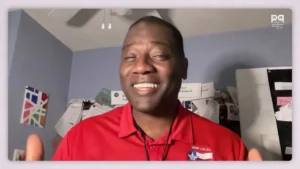
Microsoft last month announced a new five-year commitment to help bridge the “Disability Divide” the gap in societal inclusion for people with disabilities. Given the impact of the pandemic on people with disabilities, the commitments focus on talent development (employment and education), workplace culture (hiring), and accessible technology. On this episode of EdTech Today, Mike Tholfsen details Microsoft’s efforts and speculates the effects post-pandemic.
Some of these efforts include:
- Artificial intelligence (AI) in Microsoft Word will detect and convert to heading styles crucial for blind and low vision readers; new AI for Accessibility Low-Cost Assistive Technology Fund to help those who can’t currently afford it, use assistive technology.
- A new Excel navigation pane designed for screen readers will help people easily discover and navigate objects in a spreadsheet.
- Expanding Immersive Reader, used by 35 million people every month, to help with the comprehension of PowerPoint slides and notes.
- In Teams, high-contrast mode can be used to access shared content using PowerPoint Live and live closed captioning for people in the U.S. who are deaf or hard of hearing will reduce eye strain and accommodate light sensitivity with dark mode in Word.
- New LinkedIn features that include auto-captioning for LinkedIn Live broadcasts, captions for enterprise content, and dark mode later this year.
- A new background accessibility checker will provide a prompt to fix accessibility issues in content across the core Office apps and Outlook will nudge users to correct accessibility issues.
- Based on a pilot at the University of Illinois, we’re expanding our work to additional colleges and universities to increase graduation rates of students with disabilities in STEM education, reaching universities such as the University of Texas Austin, Georgia Tech, and Florida A&M.
- Investments in the Urban Airband Initiative to provide affordable broadband, hardware, and software to people with disabilities starting in Los Angeles and New York.
- New ASL video call capability through Microsoft Stores to enable deaf customers to explore Microsoft products and receive shopping support with a member of our deaf support staff.
Listen to Previous Episodes of EdTech Today!
Follow us on social media for the latest updates in B2B!
Twitter – @MarketScale
Facebook – facebook.com/marketscale
LinkedIn – linkedin.com/company/marketscale