How Technology is Unbundling Traditional Higher Education

 

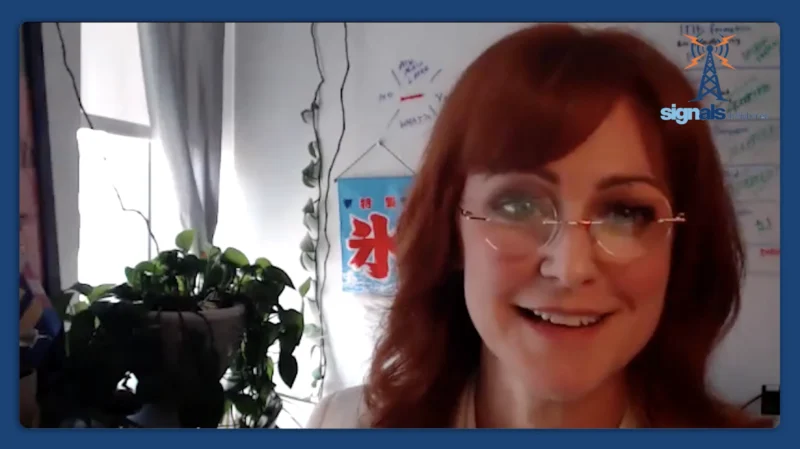
Tade Oyerinde joined the host of The Voices of eLearning, JW Marshall, to discuss online learning technology and the unbundling of traditional higher education.  Oyerinde is the founder and CEO of Campuswire, an online software specifically designed to meet the needs of professors and students.

“COVID accelerates a trend that already existed,” noted Oyerinde.

Marshall and Oyerinde discussed the dramatic increase in demand for the tools for online learning in March of this year and how that demand has continued to rise as the shift to at-home learning has been prolonged.

Oyerinde commented that one of the biggest mistakes that professors and administrators make is failing to understand the vast differences between synchronous and asynchronous learning.

“The kinds of people who will be successful in an asynchronous online environment are very different than the ones who sort of need that synchronicity… to be there with everybody else in real time,” said Oyerinde.

The duo then dove into the unbundling of traditional higher education, which offers the four E’s:  environment, education, employment, and eminence.  Oyerinde commented that technology can more easily take the place of education and employment for students, but the learning environment would certainly change and the eminence of the institutions could be affected.

Oyerinde predicted that technology innovations for online learning will completely disrupt the community college sector as it replaces the core education and employment aspects that community colleges offer to students.  Furthermore, eLearning technology will enable many institutions to drastically increase their student population at a lower price point within a few years. 

Stay Tuned for a New Episode Monday!

Follow us on social media for the latest updates in B2B!

Image

Latest

Precision With Purpose: The Geospatial Advantage in Telecom Network Planning
February 7, 2026

Telecom networks are no longer planned or evaluated in isolation. As 5G, private LTE, fixed wireless, and mission-critical communications expand, operators are expected to deliver stronger coverage, higher reliability, and demonstrable performance—often while managing complex technologies and constrained resources. Regulators, customers, and public agencies are increasingly focused on outcomes that can be measured and validated,…

Read More
Leadership
Leading Change from Within: The Power of Transformational Leadership
February 7, 2026

Leadership is being tested in real time. As organizations navigate AI adoption, remote work, and constant structural change, many leaders are discovering that strategy alone isn’t enough. People are asking deeper questions about purpose, trust, and what it really means to show up for teams when uncertainty is the norm. In a world where burnout…

Read More
technology
Clarity Under Pressure: Technology, Trust, and the Future of Public Safety
February 7, 2026

When something goes wrong in a community—a major storm, a large-scale accident, a violent incident—there’s often a narrow window where clarity matters most. Leaders must make fast decisions, responders need to trust the information in front of them, and the systems supporting those choices have to work as intended. Public safety agencies now rely…

Read More
weather Intelligence
Clarity in the Storm: Weather Intelligence, GIS, and the Future of Operational Awareness
February 6, 2026

For many organizations today, weather has shifted from an occasional disruption to a constant planning factor. Scientific assessments show that extreme weather events—including heatwaves, heavy rainfall, and wildfires—are occurring more frequently and with greater intensity, placing growing strain on infrastructure, utilities, and public services. As weather-related disruptions become more costly and harder to manage,…

Read More