Student Data Is Like a Scale for Improvement


Using data is like jumping on a scale. You can weigh yourself over and over again, but until you do something about the number you see on the scale, it’s not going to change. A similar analogy can be used for using data in the classroom. Measuring classroom data in of itself won’t bring about change until teachers feel empowered to use that data on an individual level for their students

That’s according to our guests today on the EdTech podcast brought to you by MarketScale, Istation’s Julie Kalinowski, Special Projects Lead for Customer Success, and Sabrina Jones, Professional Development Manager for Customer Success. Host Daniel Litwin sits down once again with Dallas-based Istation to discuss the impact data has in the classroom.

Sabrina says the scale analogy is especially powerful because it shows the intimate connection between data, teachers, and students.

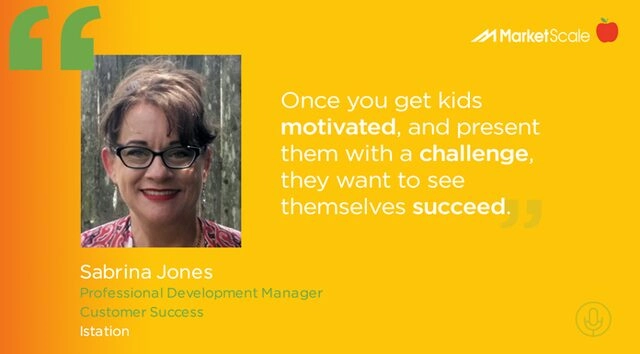
“Data is not a secret,” Sabrina said. “So, let the kids know. It’s not like they don’t know whether they’re a gifted reader, so bring them into it for that motivation. Once you get kids motivated, it’s a challenge for them and they want to see themselves succeed.”

Julie has another analogy for data — a thermometer.

“You use it to measure whether or not a child has a fever, but if you don’t do anything about that fever then it’s not going to change,” Julie said.
The change often comes from students.

“If students start taking ownership of their own data through data folders, that’s where you’ll see the biggest bang for the buck,” Julie said. “That’s where kids make the most growth.”

For the latest news, videos, and podcasts in the Education Technology Industry, be sure to subscribe to our industry publication.

Follow us on social media for the latest updates in B2B!
Twitter – @EdTechMKSL
Facebook – facebook.com/marketscale
LinkedIn – linkedin.com/company/marketscale

Follow us on social media for the latest updates in B2B!

Image

Latest

healthcare
The Healthcare Talent Fix: Build Pipelines Early, Use Data, and Get the Experience Right
May 18, 2026

There’s a growing tension inside healthcare right now—between the people leaving the workforce and the patients still arriving every day. It’s a dynamic that leaders can no longer afford to ignore. The numbers make that clear: the Association of American Medical Colleges estimates that the U.S. could be short of as many as 86,000 physicians…

Read More
education
Just Thinking… About Federal Funds, Student Support, and the Future of Education with Eric Reaves
May 15, 2026

As conversations around the future of the U.S. Department of Education continue to intensify, educators and federal program leaders are facing mounting uncertainty about how federal funds will be managed, distributed, and regulated. At the same time, schools serving historically underserved students remain heavily reliant on programs like Title I and other federally…

Read More
trust
The Strongest Leaders Build Belief, Model Discipline and Earn Trust
May 14, 2026

Workplace leadership is under pressure: employees are continuing to disengage, and many managers are still trying to fix a trust problem with performance tactics. Gallup reported that U.S. employee engagement fell to 31% in 2024, its lowest level in a decade, and its research has found that managers account for at least 70% of…

Read More
medicine
The Art of Recovery: Where Music and Medicine Meet in Patient Care
May 14, 2026

Healthcare today can feel overwhelming—not just for patients, but for the teams caring for them. After a major illness or injury, recovery isn’t handled by one doctor alone; it often involves a whole network of specialists, from physical therapists to nurses to social workers, all trying to help someone regain their independence and quality…

Read More