School Safety Today: Survey Says—Gap on Perception of School Safety

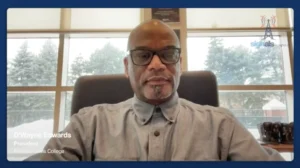
Is there a gap between how parents and students perceive a particular school’s safety and how the school administrators do? A 2021 survey in partnership with Raptor Technologies revealed a wide gap in the perception of school safety initiatives. Students and parents are less confident than administrators in several critical areas, including a 30-point gap when asked if their school takes a proactive approach to safety awareness.

To further discuss these survey results and look at some strategies schools can take moving forward, School Safety Today tapped mother, educator, and Co-Founder of Safe and Sound Schools, Michele Gay.

“Being an educator, school safety was always a thing,” Gay said. “Those seeds were planted and watered over the years.” But when Gay lost her youngest daughter, Josephine, at Sandy Hook, that not only changed her life forever, but her perspective on school safety changed and became a recognition that school safety needs to be a top priority.

In co-founding Safe and Sound Schools with a fellow Sand Hook parent, Gay’s mission is to ensure all schools in the United States and beyond have the resources and assistance available to make schools safer. “There are so many people with so much to contribute. For us, it’s really just about bringing that all together,” Gay said.

Gay said she was not surprised by the survey results showing gaps, but the gaps in student perception were troubling because they are the ones at the school every day. “To see that there is this disenfranchised group that is our primary stakeholder, that waves a big red flag for all of us.”

Some of these gaps could be due to a lack of effective communication between the schools and the parents, a barrier Gay admitted is a challenge. “You can tell people stuff, and hopefully they remember it, but once they become engaged in it, and they’re a part of it, they’re not only remembering it, but sharing it with others,” Gay said. So, engaging the community is a necessary tool for closing the communication gap.

Follow us on social media for the latest updates in B2B!

Image

Latest

transportation management
Transportation Management Systems Don’t Compete With Carriers, Brokers, or Shippers — They Align Them
February 10, 2026

Transportation management systems are undergoing a quiet but consequential shift. Once viewed primarily as tools for tracking loads and storing paperwork, modern TMS platforms are increasingly expected to function as the operational backbone of logistics organizations. As freight volumes continue to fluctuate, margins remain tight, and supply chains rely on a growing mix of…

Read More
AI adoption strategy
Five by Five Leadership: Why Purpose, Warmth, and Clarity Matter More Than Ever at Work
February 10, 2026

For the first time in history, workplaces now span five generations, forcing leaders to rethink long-standing assumptions about motivation, communication, and career growth. As Gen Z enters the workforce, they bring expectations shaped by a desire for meaningful work, clear development paths, and work-life balance—rather than traditional, one-size-fits-all career ladders. In an era marked…

Read More
Experiential
Scaling Experiential Learning at Slippery Rock University with Dr. John Rindy
February 9, 2026

Regional public universities are being asked to do more with fewer students, fewer dollars, and less margin for error—making student persistence, timely graduation, and career outcomes central institutional concerns. Under mounting enrollment pressure and a shifting labor market, experiential learning has moved from a “nice to have” to a strategic imperative. Research consistently shows…

Read More
data center workforce
The Next Data Center Bottleneck Isn’t Power or Cooling — It’s People: The Data Center Workforce
February 8, 2026

With the rapid rise of AI workloads, data centers are being built with higher power density, stricter reliability expectations, and cooling technologies that are evolving faster than most teams can adapt. As a result, these facilities aren’t just getting bigger—they’re becoming harder to operate, harder to staff, and far less forgiving when something goes…

Read More