signals in higher ed
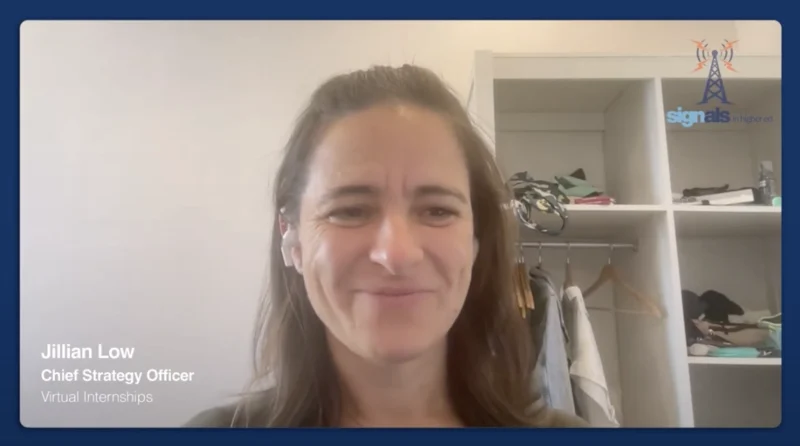
The narrative around early-career work has become increasingly pessimistic, with headlines pointing to a shrinking pool of entry-level roles, fewer internship opportunities, and AI accelerating both trends. But beneath that narrative, a different tension is emerging—one that’s less about the disappearance of opportunity and more about how it’s being reshaped. Students are using AI…
Latest
Articles Education Technology
Building the Next Generation of Educators Through Apprenticeship Pathways and Workforce-Aligned Training
Teacher shortages aren’t exactly a new headline—but lately, they’ve started to feel a lot more urgent. In some places, schools have gone years without enough fully trained teachers in the classroom, exposing real flaws in how we prepare and retain educators. Add in the rising cost of becoming a teacher and training models that haven’t…
Articles Education Technology
The Employer University Alignment Journey with Kristen Fox, CEO of Business-Higher Education Forum
Across the U.S., the conversation about the value of a college degree is increasingly tied to one central question: Does higher education actually prepare students for the workforce? As artificial intelligence reshapes how work gets done and employers rethink the skills they need, universities are under growing pressure to ensure graduates leave not just…
Education & EdTech
The Degree That Pays You Back: How Employer-Sponsored Apprenticeships Are Rewriting Higher Ed
Higher education is under pressure. Over the past few years, public confidence in the value of a four-year degree has declined significantly, with fewer Americans expressing a strong belief that traditional higher education delivers a worthwhile return on investment. At the same time, employers consistently report that graduates lack job-ready skills—particularly the “durable skills”…
Education & EdTech
Why Institution-Wide Employer Alignment Will Define the Next Era of Higher Ed
Higher education is at an inflection point. Institutions are facing a demographic cliff in traditional-age enrollment, softening international pipelines, and increasing scrutiny around the return on investment of a degree. At the same time, the World Economic Forum reports that 59 out of every 100 workers globally are projected to require reskilling or upskilling…
Education & EdTech
Workforce Alignment, and the New Blueprint for Career-Connected Learning Ecosystems
Workforce shortages, shifting federal and state policy, and rising skepticism about the return on investment of a traditional four-year degree have pushed career-connected learning to the forefront of education reform. According to the U.S. Bureau of Labor Statistics, overall employment is expected to increase by nearly 4.7 million jobs between 2022 and 2032, with…
Education & EdTech
Flood the Zone: University of Virginia’s New Strategy to Scale Experiential Learning for Every Student
Experiential learning is having a bit of a reckoning moment in higher ed. For years, the default answer was “get an internship” or “do a co-op”—as if every student can pause life, relocate for a summer, and take on a high-stakes role that’s supposed to define their future. But students’ realities have changed: many…
Latest

Rethinking Leadership: Why “Doable” Might Be the Most Powerful Strategy in Education Today
At a time when educator burnout is rising and schools across the U.S. are facing ongoing teacher shortages, leaders are being forced to rethink what sustainable success actually looks like. Research shows that teacher attrition is closely tied to working conditions, job-related stress, and workload demands. As districts push for innovation, data-driven instruction, and…
From Poverty to Pricing Power | Why Great Companies Undercharge
Casey Brown didn’t grow up thinking she would become an entrepreneur. She grew up in a blue-collar family where money was always tight — close enough to the edge that the fear of poverty shaped many of her early decisions. That fear led her into engineering, into corporate America, and eventually into a moment…
Nightingales Summit: Empowering the Next Generation of Nigerian Nurses
In this episode of Care Anywhere, host Lea Sims sits down with Nigerian nurse entrepreneur and advocate Obafemi Arowosegbe to discuss leadership, mentorship, and the future of nursing in Africa. While still a nursing student, Obafemi founded the Nightingale Summit, a growing conference designed to empower nursing students and early-career nurses with leadership skills,…

From Denial to Access: Rethinking Oncology Care Through AI, Clinical Trials, and Patient-Centered Innovation
The rapid expansion of precision medicine, biologics, and targeted cancer therapies is transforming oncology—but it’s also overwhelming a system not built to keep pace. In the U.S., cancer drugs now account for some of the highest-cost treatments in healthcare, and with that has come a surge in prior authorization requirements and denials. Studies suggest physicians…
Latest Videos - signals in higher ed
Articles Education Technology
Tale of Two Interns: What AI Is Really Doing to Entry-Level Work
The narrative around early-career work has become increasingly pessimistic, with headlines pointing to a shrinking pool of entry-level roles, fewer internship opportunities, and AI accelerating both trends. But beneath that narrative, a different tension is emerging—one that’s less about the disappearance of opportunity and more about how it’s being reshaped. Students are using AI…
Building the Next Generation of Educators Through Apprenticeship Pathways and Workforce-Aligned Training
Teacher shortages aren’t exactly a new headline—but lately, they’ve started to feel a lot more urgent. In some places, schools have gone years without enough fully trained teachers in the classroom, exposing real flaws in how we prepare and retain educators. Add in the rising cost of becoming a teacher and training models that haven’t…
The Employer University Alignment Journey with Kristen Fox, CEO of Business-Higher Education Forum
Across the U.S., the conversation about the value of a college degree is increasingly tied to one central question: Does higher education actually prepare students for the workforce? As artificial intelligence reshapes how work gets done and employers rethink the skills they need, universities are under growing pressure to ensure graduates leave not just…
The Degree That Pays You Back: How Employer-Sponsored Apprenticeships Are Rewriting Higher Ed
Higher education is under pressure. Over the past few years, public confidence in the value of a four-year degree has declined significantly, with fewer Americans expressing a strong belief that traditional higher education delivers a worthwhile return on investment. At the same time, employers consistently report that graduates lack job-ready skills—particularly the “durable skills”…
Education & EdTech
Why Institution-Wide Employer Alignment Will Define the Next Era of Higher Ed
Higher education is at an inflection point. Institutions are facing a demographic cliff in traditional-age enrollment, softening international pipelines, and increasing scrutiny around the return on investment of a degree. At the same time, the World Economic Forum reports that 59 out of every 100 workers globally are projected to require reskilling or upskilling…
Workforce Alignment, and the New Blueprint for Career-Connected Learning Ecosystems
Workforce shortages, shifting federal and state policy, and rising skepticism about the return on investment of a traditional four-year degree have pushed career-connected learning to the forefront of education reform. According to the U.S. Bureau of Labor Statistics, overall employment is expected to increase by nearly 4.7 million jobs between 2022 and 2032, with…
Flood the Zone: University of Virginia’s New Strategy to Scale Experiential Learning for Every Student
Experiential learning is having a bit of a reckoning moment in higher ed. For years, the default answer was “get an internship” or “do a co-op”—as if every student can pause life, relocate for a summer, and take on a high-stakes role that’s supposed to define their future. But students’ realities have changed: many…
Scaling Experiential Learning at Slippery Rock University with Dr. John Rindy
Regional public universities are being asked to do more with fewer students, fewer dollars, and less margin for error—making student persistence, timely graduation, and career outcomes central institutional concerns. Under mounting enrollment pressure and a shifting labor market, experiential learning has moved from a “nice to have” to a strategic imperative. Research consistently shows…
Education & EdTech
Work-Based Learning & Career Coaching with Strada Education: Closing the Gap Between Education and Opportunity
As higher education faces mounting pressure to demonstrate clear career outcomes, institutions are rethinking how learning connects to work and the role of career coaching in that process. Employers continue to report skills gaps, students are questioning the return on investment of a degree, and states are demanding stronger alignment between postsecondary education and…
Experiential Learning: A Cure for the Medical Worker Shortage with Jason Aubrey of Skilltrade
Healthcare systems across the U.S. are facing a persistent and worsening medical worker shortage, particularly in allied health roles that keep hospitals, clinics, and surgery centers running. Rural access gaps, rising tuition costs, and skepticism about the ROI of traditional degrees are colliding with urgent employer demand. At the same time, momentum is building…
A One-Year College Alternative: How Pega6 Is Preparing to Train AI-First, Job-Ready Talent
The traditional four-year college model is facing growing pressure as rising tuition, shifting labor market demands, and new technological realities expose gaps between education and employment outcomes. Confidence in the traditional college pathway is eroding among parents, students, and employers as rising costs and persistent skills gaps collide with the reality that many new…
Career-Connected Continuing Ed: How Upright Education Helps Colleges Upskill Adult Learners in Digital Skills
Higher education is undergoing a quiet shift. While undergraduate enrollments remain in long-term decline, continuing education has emerged as one of the sector’s fastest-growing segments, expanding at more than 11% annually. At the same time, rapid advances in AI, data, and cybersecurity are reshaping nearly every job category, forcing institutions to rethink how quickly…