FLYING UAS IN THE USA: THE CURRENT STATE OF DRONE REGULATIONS IN THE UNITED STATES

Important Note on This Blog: Regulations and rules vary widely by nation, territory or state. This article was intended to be a resource of interest for our friends in the U.S., who in 2016 gained clarity on drone flying for professional use via the launch of Part 107. By no means is this article intended to be an exhaustive resource for aspiring drone pilots in the U.S. or any other country. Always check your national, regional and local laws before flying!
The soaring popularity of civilian unmanned aircraft systems (UAS), or drones, is motivating countries around the world to institute policies to regulate their use in order to safeguard the public and the environment. In the United States, the Federal Aviation Administration (FAA) has been tasked with introducing rules for safely integrating UAVs into a complex airspace. “I think the FAA was able to put in place a regulation that allows the commercial use of drones while assuring the safety of the population,” says Jocelyne Bois, Microdrones Flight Operations Manager.
REMOTE PILOT CERTIFICATE
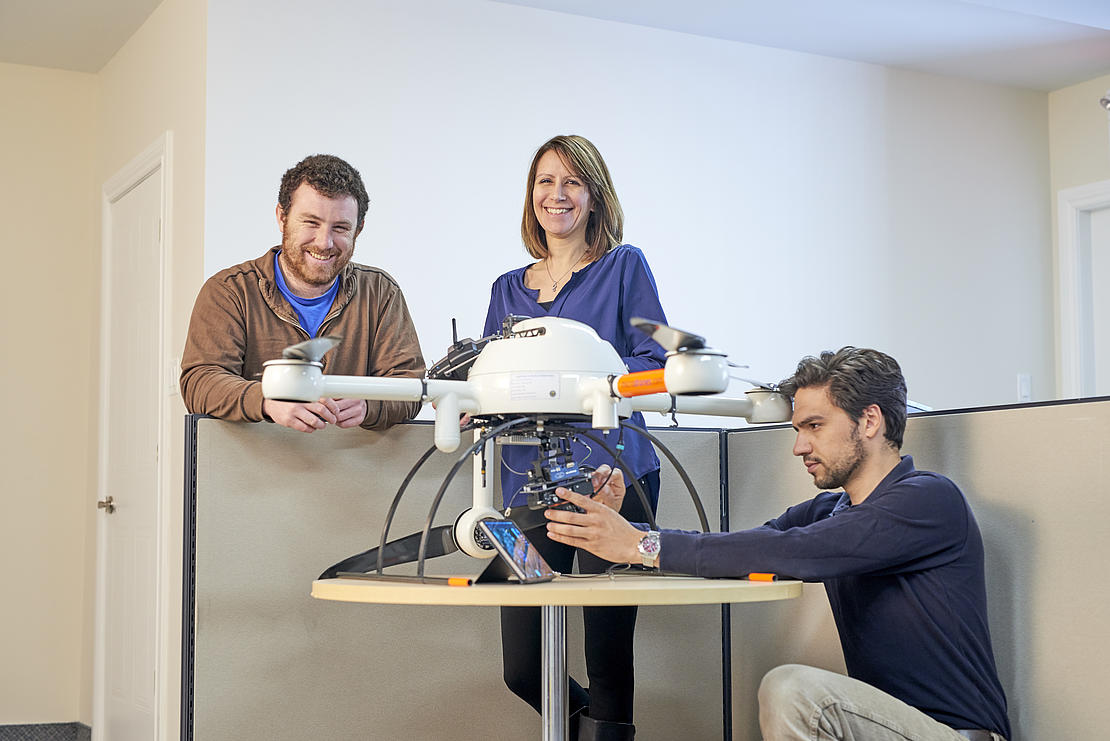
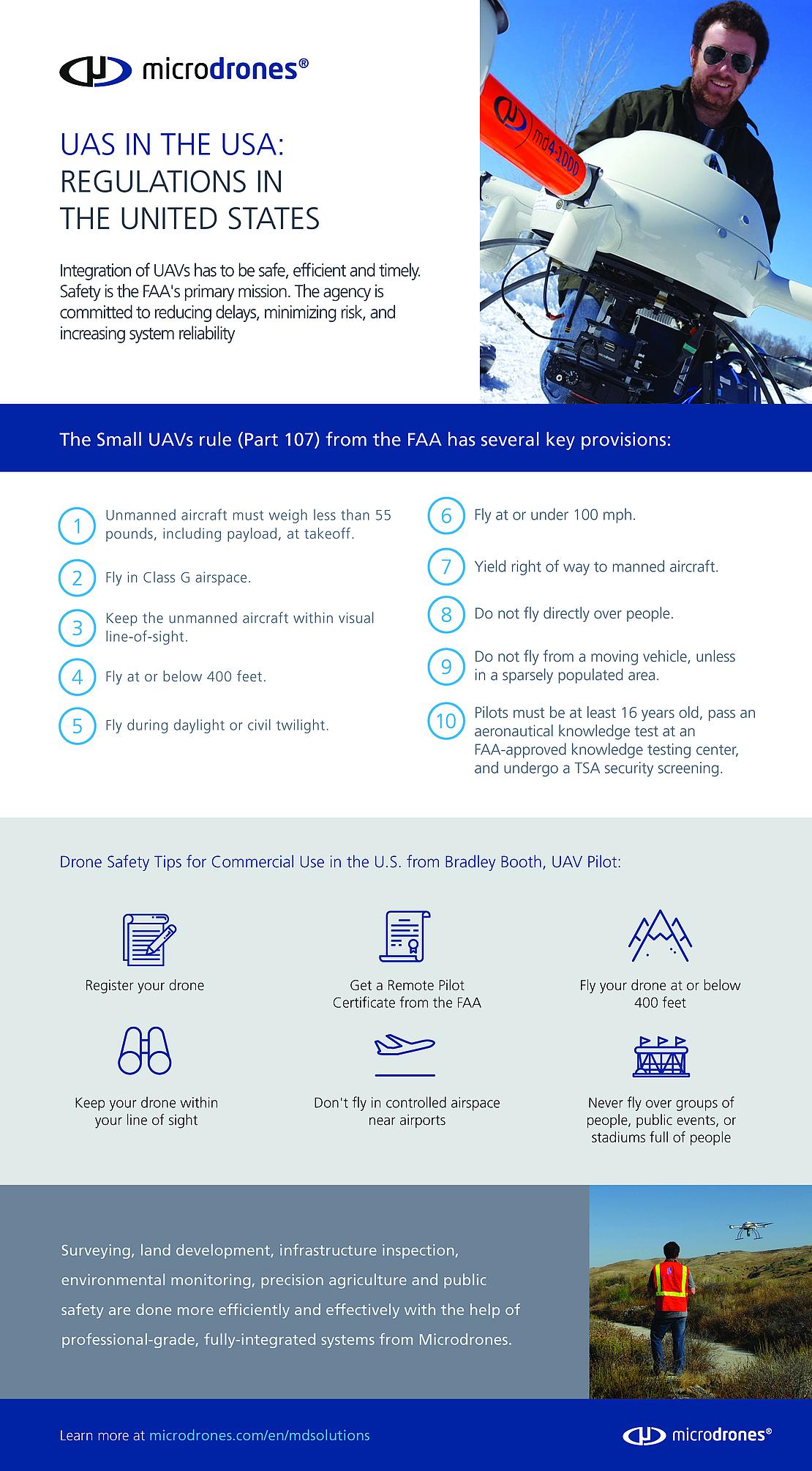
According to the FAA’s Small UAS Rule (Part 107), drone operators must pass an aeronautical knowledge test to obtain a Remote Pilot Certificate. Here is a helpful link to the FAA study guide for those who are interested.
KEY SAFETY TIPS
UAV Pilot Bradley Booth offers a few tips for safe drone flights. Operators should obtain their Remote Pilot Certificate from the FAA and register their drone. It’s required to fly the drone at or below 400 feet without a specific waiver or authorization, remembering to keep the aircraft within line of sight. Never fly the vehicle near airports into controlled airspace, or over groups of people at public events or stadiums.
EVOLVING REGULATIONS
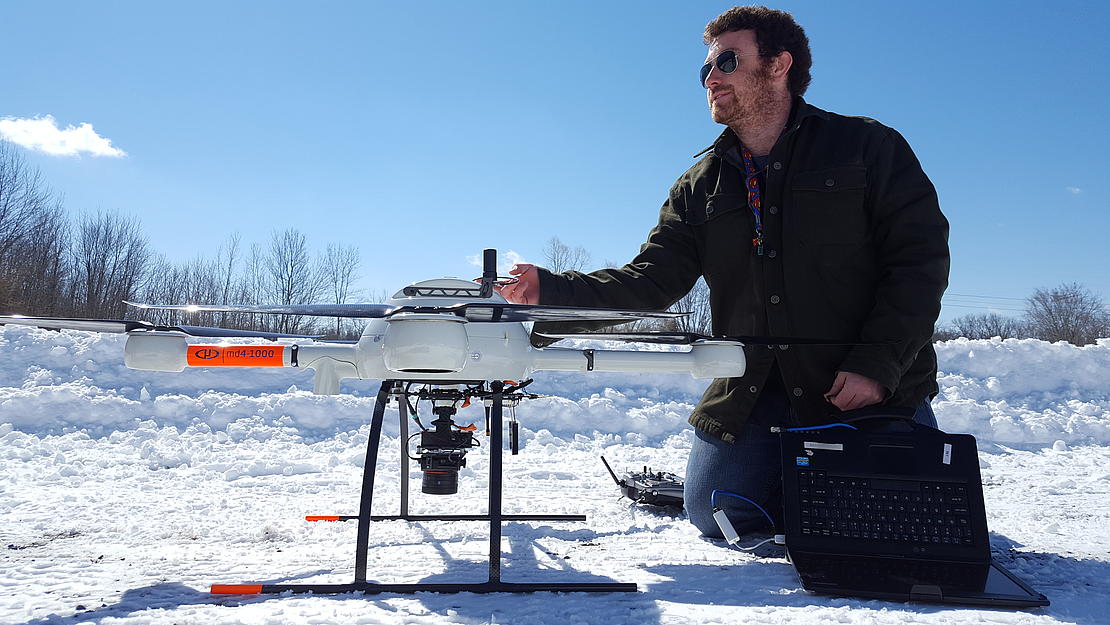
Regulations of commercial drone use will evolve as the technology continues to develop.
Jocelyne Bois explains, “There is some Airspace that is designated for Beyond Visual Line of Sight flight testing, and for sure the regulations will be modified one day to allow this kind of flight into the general airspace. Still, it may be some time before these changes occur due to the many government agencies and interests involved when it comes to regulating commercial drone use.”
In the meantime, the Microdrones team has prepared the handy infographic below to help those just getting started:
WHEN YOU’RE CERTIFIED TO FLY PROFESSIONALLY
Microdrones offers drone packages for commercial applications including surveying, land development, infrastructure inspection, environmental monitoring, and precision agriculture.
Are you getting ready to make drones a part of your work? Our team will be happy to help you select the right solutions. Start the conversation today.
Read more at microdrones.com