Healthcare Legend Quint Studer Discusses His New Book, ‘The Calling”

The path of many healthcare workers, such as physicians, is a long one, but filled with much celebration along the way. There are the celebrations of getting into medical school, passing the boards during medical school, graduating, landing a residency, and completing a residency. But the path to becoming a healthcare hero is also emotionally daunting, with exposure to extreme human suffering, long hours, frustrations with insurance, and physical demands contributing to emotional fatigue.
So, what are some ways healthcare workers can keep their emotional bank full and help fill the emotional banks of those they work with?
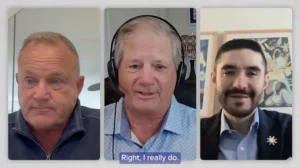
On this episode of I Don’t Care host Kevin Stevenson, is joined by Quint Studer, Co-Founder of Healthcare Plus Solutions Group, Founder of Studer Community Institute, and author of The Calling: Why Healthcare is So Special, to talk about the uniqueness of the healthcare industry, how emotional health differs in healthcare workers compared to workers in other industries, and how burnout issues can be addressed.
Healthcare is one industry where there are severe issues with emotional burnout. Surveys of more than 20,000 U.S. physicians showed almost a 50 percent burnout rate over a three-year period.
Studer connected this to the origins of his book. “I think employees, leaders, any organization in healthcare, we start with a pretty full emotional bank account…but I think unfortunately, in healthcare, if we don’t replenish it all the time, there’s so many more withdrawals than deposits. So, the book was really meant about how do we replenish ourselves, and then if we replenish ourselves, how do we replenish others?”
Stevenson and Studer also discuss…
- The inspiration for Studer’s publication
- Employee engagement and how healthcare workplaces can tackle issues that contribute to burnout
- The importance of belonging in healthcare
Studer stated, “I think in healthcare, we’ve got to narrow that scope of what we’re asking managers to do right now because of the experience level. And maybe, someday, we can go back to a lot of stuff. But today, we call it ‘less equals always.’ And we do something always, we get the consistency.”
Quint Studer is an experienced founder who has worked in professional training and coaching. He is Co-Founder of Healthcare Plus Solutions Group, Founder of Studer Community Institute, and Owner of the Pensacola Blue Wahoos. Studer is also author of The Calling: Why Healthcare is So Special. Some of Studer’s past positions include CEO of Holy Cross Hospital in Chicago and Senior Vice President of Business Development of Mercy Hospital in Wisconsin. Studer has a B.S. in Special Education and Teaching and an MS in Education, both from the University of Wisconsin-Whitewater.