How Augmented Reality May Be the Future of Live Events

The way we communicate, share data and use technology to act on those insights is changing – and it’s all leading to the cloud.
On In the Cloud, every week new experts will engage in a fire side chat and will bring their extensive experience in software, IT and mobile solutions straight to you, offering a glimpse into the future of cloud connectivity around.
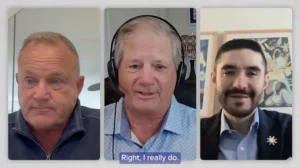
Leveraging augmented reality (AR) for in-person and digital events is becoming an essential technology tool for event organizers. After a year of everything virtual, what will AR’s role in the future of immersive? In the Cloud host Daniel Litwin asked this big question and more of guest Nicholas Robbe, CEO of Hoverlay. Hoverlay is an AR publishing platform and camera browser solution.
Robbe started with an AR explainer. “It’s a medium that sits between traditional content and physical events. It can enhance in-person and remote events. AR brings content through the camera with an illusion of presence bringing people closer to it.”
While AR was gaining in popularity, the last year, according to Robbe, “pushed the envelope on virtualizing a space.”
However, Robbe noted that the visual effects aren’t the core. “It’s a way to deliver content, and AR is rooted in the content. The effects don’t replace the storyline.”
One great example of this that Robbe shared was the placement of holograms around physical art collections of the artists. “It’s a new form of experience where people can learn from the artist what the art actually means.”
Bringing AR to scale isn’t easy and requires integrations and support. Robbe described what’s driving this capability. “5G is enabling connectivity for very rich content that includes 3D models and video. The hardware is another need, and input from sensors and IoT that collect data.”
Robbe’s parting advice for those organizations that want to use AR was “don’t think about AR.” He continued, “Think about the emotional state you want the public to get to and go from there to think about how to use AR to get to that end.”
Stay Tuned For New Episodes
Follow us on social media for the latest updates in B2B!
Twitter – @MarketScale
Facebook – facebook.com/marketscale
LinkedIn – linkedin.com/company/marketscale