How College Athletic Departments Should Be Educating Their Athletes on NIL

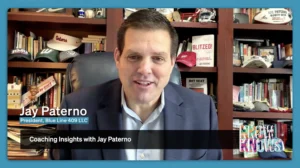
Named one of Sports Business Journal’s 40 under 40, Casey Schwab is making an impact in the sports -and education- world. In this new episode of Game Changers, host Katie Steinberg sits down with Schwab, CEO of Altius Sports Partners, to discuss education advisory work in utilizing the NIL and beyond.

Schwab emphasized the work Altius focuses on, which is in working for athletic departments to provide athletes with the education and guidance they need to maximize the NIL and strike a balance for those wanting to go into the NFL.

By focusing on long-term goals, rather than short-term monetary gains, Altius helps athletes envision the impact NIL might make when entering into the league and beyond.

Steinberg emphasized one of Altius’ mission goals is in empowering athletes which Schwab said Altius does by, from an institutional perspective, providing resources for the athletes to turn to. Rather than working for each athlete individually, Altius is paid by the university institution to provide “objective guidance in a compliant way”.

In answering how athletic departments should be educating their athletes, Schwab stated “offensively and defensively.” In essence, departments need to get out in front of NIL and talk to athletes about resources and different situations they might come across. This provides a place for the athlete to go to to understand what the next step is in different situations.

Schwab said that Altius aims to create relationships between brands and athletes in a positive and insightful way. He said that while there is certainly an imbalance between athletes wanting to be in this space (NIL) and brands that want to be in this space, Altius focuses on providing guidance for that athlete, to know what to do and how to talk to them.

As for capitalizing on new opportunities, like being the Cinderella team in March Madness, those athletes and groups must be educated on NIL to really take advantage of those viral moments. With Altius, Schwab aims to make this new landscape equally playable.

More Stories Like This:

Eric Dickerson Turns His Toughest Career Moments into Lessons for the Next Generation of Players

Where Stadiums and Resorts Rank with Fiber and 5G Deployments

Follow us on social media for the latest updates in B2B!

Image

Latest

Leadership
Leading Change from Within: The Power of Transformational Leadership
February 7, 2026

Leadership is being tested in real time. As organizations navigate AI adoption, remote work, and constant structural change, many leaders are discovering that strategy alone isn’t enough. People are asking deeper questions about purpose, trust, and what it really means to show up for teams when uncertainty is the norm. In a world where burnout…

Read More
technology
Clarity Under Pressure: Technology, Trust, and the Future of Public Safety
February 7, 2026

When something goes wrong in a community—a major storm, a large-scale accident, a violent incident—there’s often a narrow window where clarity matters most. Leaders must make fast decisions, responders need to trust the information in front of them, and the systems supporting those choices have to work as intended. Public safety agencies now rely…

Read More
weather Intelligence
Clarity in the Storm: Weather Intelligence, GIS, and the Future of Operational Awareness
February 6, 2026

For many organizations today, weather has shifted from an occasional disruption to a constant planning factor. Scientific assessments show that extreme weather events—including heatwaves, heavy rainfall, and wildfires—are occurring more frequently and with greater intensity, placing growing strain on infrastructure, utilities, and public services. As weather-related disruptions become more costly and harder to manage,…

Read More
AI in sterile processing
AI in Sterile Processing Is Proving Its Value by Acting as a Co-Pilot, Not a Replacement
February 5, 2026

Sterile processing departments are dealing with persistent operational pressures. Surgical case volumes are rising, instruments are more complex, and staffing shortages remain across many health systems. Accuracy and documentation requirements continue to tighten, leaving little room for error. In busy hospitals, sterile processing teams may handle 10,000 to 30,000 surgical instruments per day, with…

Read More